DEBT MERC & Emberjack Offer Two Ways To Die Glorious Deaths
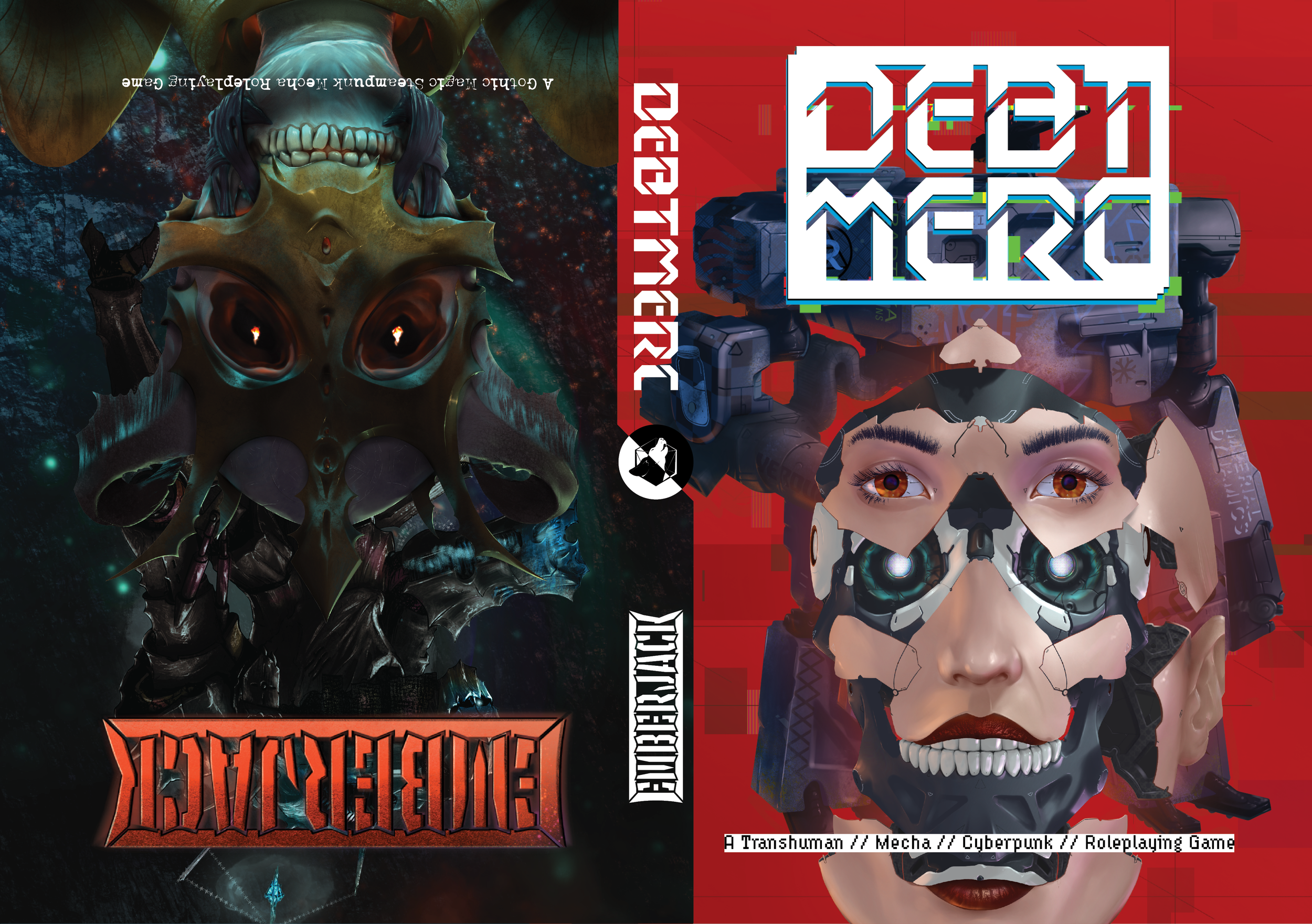
The DEBT MERC and Emberjack TTRPGs will share one book, offering two distinct campaign worlds in which to tell grim stories of futility and death.
My default rubric, when I act in the Storyteller role in Tabletop RPGs, is to read a compelling campaign setting book cover to cover and let that inspire the creation of an original chronicle in that world, one that covers a real-world year worth of sessions, minimum. I aim for tonally dead serious games where consequences matter and meaningful victories don’t come easily. These campaigns sometimes end early, almost aways in despair, if the player characters fail at a point where there is no coming back. If there are no real stakes for loss, then victory doesn’t feel very satisfying.
“Shorter tales of loss and futile struggle can be powerful, memorable experiences.”
As I am nearing the end of a four-year-long game, I was reflecting on how some of those bleak premature endings, where a story was cut short and ended in tragedy, are among some of the most memorable and powerful TTRPG experiences. I wouldn’t say they are inherently better than the multi-year epic that ends in good triumphing over evil, but there is something special about the endings that resemble that of Butch Cassidy and the Sundance Kid, or the fall of Chow Yun Fat’s character Mark in John Woo’s A Better Tomorrow. That vibe perfectly suits DEBT MERC and Emberjack.
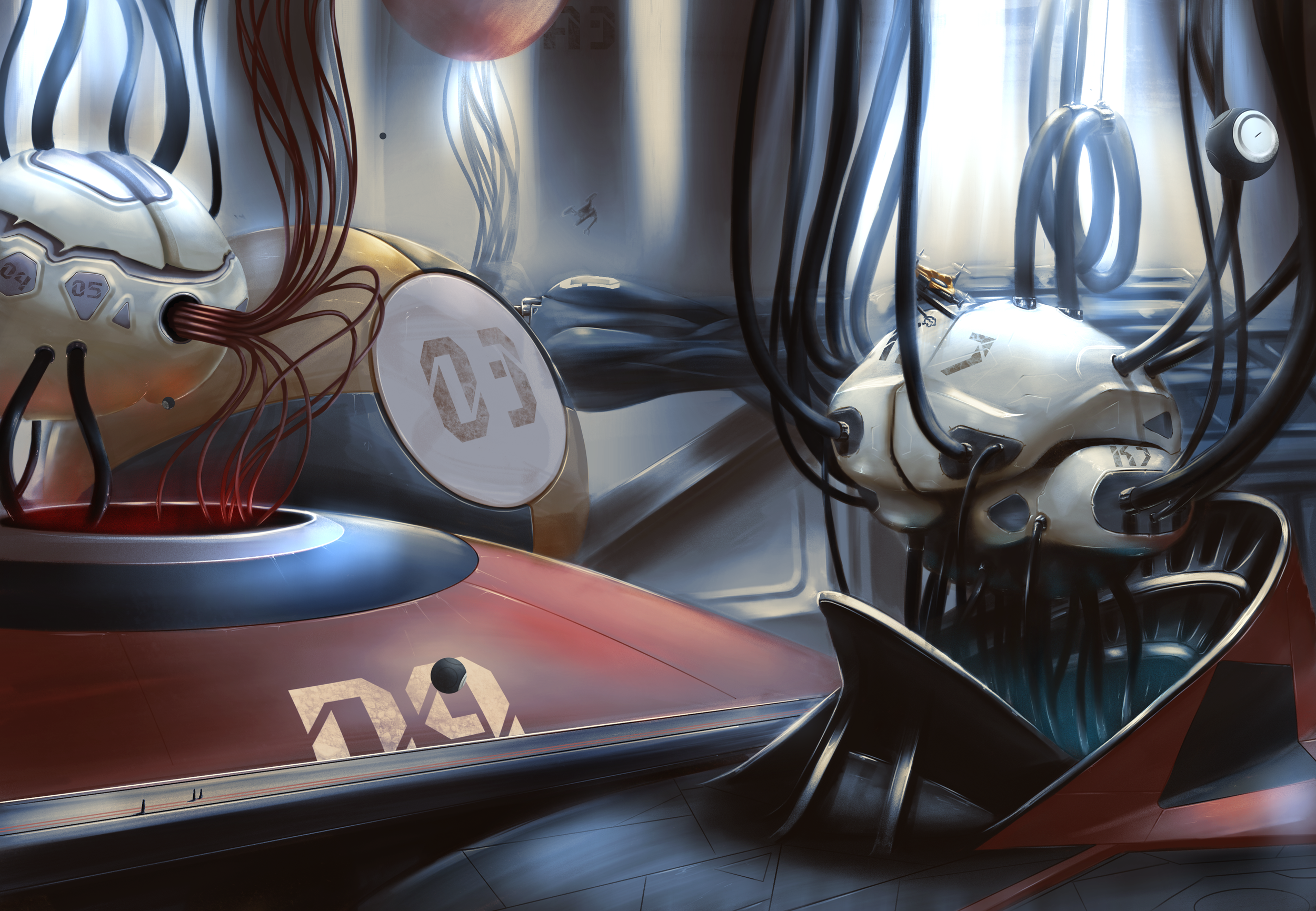
DEBT MERC has transhumanist themes, and the players portray Cores, mechanical enclosures containing a human consciousness, or something close to it.
As of the time of this writing the crowdfunding for the two-in-one mecha-focused tabletop RPG pairing, DEBT MERC and Emberjack, is scheduled to go live in less than two weeks. The final product will be a slick book that contains the full setting and rules for a science-fiction transhumanist TTRPG, DEBT MERC; when the book is flipped the opposite way, it also offers everything needed to run a dark fantasy steampunk mecha TTRPG in the world of Emberjack. The Relict TTRPG system powers both games, so jumping from a cyberpunk campaign to a gothic horror chronicle is relatively easy.
TIP: Relict is a free, open-source TTRPG system.
DEBT MERC and Emberjack showcase the new Relict Tech subsystem.
From participating in some playtest sessions and reading over the early drafts and promotional materials for these games, I was struck by the notion of how both could support either longform, epic campaigns, or shorter, more self-contained adventures with tragic endings. In a prior article I wrote about Eat the H.I.V.E., an anti-fascist, anti-capitalist sci-fi hack of Eat the Reich by way of a Warhammer 40k influenced future. That game was structured around the assumption of short duration adventures lasting just a few sessions from start to finish. Shorter tales of loss and futile struggle can be powerful, memorable experiences.
“The more compelling and narratively rational idea is that they work to tear down the system
that plunged them, and their comrades, into a living hell in the first place.”
DEBT MERC calls out influences like Ghost in the Shell and Armored Core alongside the sci-fi subgenres of Cyberpunk and Transhumanist fiction. The game features player characters that are human (or humanlike) consciousnesses, called Cores, contained within synthetic bodies called Prints. These prints routinely make use of Shells, which are the mecha of the setting. The premise is that these minds are woken up from cryosleep with massive amounts of debt they need to work off to know freedom, so they take on the most dangerous, high-risk jobs to dig themselves out of the financial pit they were born into.

As a Debt Merc a player character aims to get out of the crushing debt their were born into, or die trying, the latter of which might be just as compelling as the former.
Going back to William Gibson’s original Sprawl Trilogy of novels, Cyberpunk fiction has nearly always focused on the wealth gap, frequently through the lens of street level hackers and mercenaries clashing with the monolithic power of mega-corporations. This has been carried through into the various TTRPG takes on the genre, like Shadowrun, and R. Talsorian’s Cyberpunk TTRPG. The popular anime adaptation of the Cyberpunk TTRPG, Edgerunners, delivered an iconic vision of the Cyberpunk experience – both the TTRPG and the genre it takes its name from. It follows David Martinez, a poor youth raised by a struggling single parent.
TIP: Any anti-capitalist dystopian fiction, from satire like Sorry to Bother You or Brazil, to grim parables like High-Rise or Infinity Pool, serve as great touchstones for any Storyteller planning a DEBT MERC campaign.
After the death of David’s mother, he takes on dangerous military grade cybernetic enhancements, along with the life of a mercenary. The show makes heavy handed references to the themes of the genre, wherein Edgerunners and Cyberpunks rarely expect to live long lives, but aim to burn out brightly, living on through their street-level legends. From my first brush with DEBT MERC, it was clear the game understands the genre. The latest trailer even notes the few who successfully get out from their debts are “legends” for having done so. The most compelling part, to me, is the implicit “or die trying.”
“Viewing DEBT MERC with more of a Call of Cthulhu paradigm,
stories like those of David from Cyberpunk Edgerunners become the ideal.”
My ST instinct, when first encountering the DEBT MERC lore, is to take the anti-capitalist parable of the game and run with it all the way to its logical conclusion. A merc simply performing black ops gigs to get out from under debt could be an end unto itself, but where does a character go from there? Do they willingly continue to live the mercenary life, since it’s all that they’ve known, and civilian life might be an impossible adjustment? The more compelling and narratively rational idea is that they work to tear down the system that plunged them, and their comrades, into a living hell in the first place.
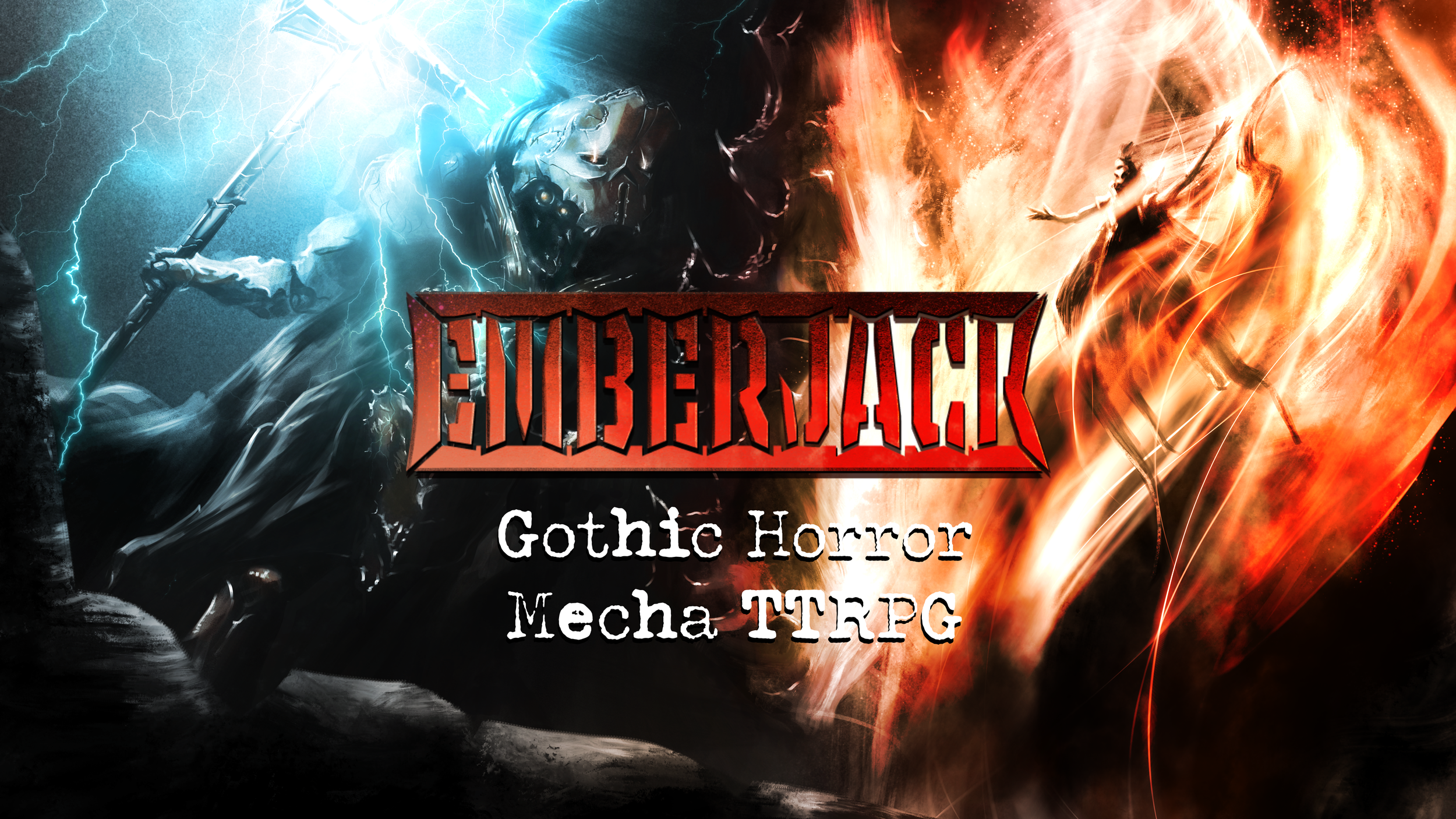
Emberjack may remind players of dark steampunk TTRPGs like Iron Kingdoms, or the grim fiction of Glen Cook’s The Black Company.
That’s the DEBT MERC epic, the multi-year campaign, where experiencing the life of high-stakes wage slavery to make the minimum payments to avoid having your body repossessed is just the foreshadowing of a larger conflict. TTRPG veterans know there are different expectations for Call of Cthulhu and Dungeons & Dragons. D&D is Heroic Fantasy, where ultimately any eldritch horror can be faced in a way that offers a level-appropriate Challenge Rating and a “tough but fair” battle. CoC games typically end in death and madness, as the perils are great, and the more one learns the more one’s sanity is imperiled.
TIP: DEBT MERC and Emberjack both offer scaling akin to systems like Shadowrun or Cyberpunk, where inherent characteristics increase alongside the benefits of superior gear, particularly in DEBT MERC, so a long-form campaign is also well-supported with these systems.
Viewing DEBT MERC with more of a Call of Cthulhu paradigm, stories like those of David from Cyberpunk Edgerunners become the ideal. The heroes might struggle to get out of debt and perish in the process. Or they might turn their guns on the Debt Merc system itself and die in an act of martyrdom against an economic cage that is certainly as much of a cosmic horror as any Great Old One or Outer God. I have options, since DEBT MERC certainly offers plenty of room for scaling, but also a highly lethal system where death is always around the corner.
“They may be able to protect the people from the setting’s worst supernatural threats,
but Emberjacks remain soul-fueled horrors and living reminders of the Godkings’ reign.”
Emberjack, the second half of the two-in-one TTRPG book, names Escaflowne and Dark Souls as inspirations. To me, the lore and vibe call to mind both Iron Kingdoms, a grim fantasy “mechapunk” setting I’ve enjoyed multiple campaigns in, and the tone of Glen Cook’s The Black Company novels. The notion of a setting that’s recovering from the reign of the Godkings, but one that still has myriad threats to deal with, reminded me of early stories of The Black Company, where despite the fall of The Dominator, The Lady and her cohorts still made for a (nearly) hopeless world.
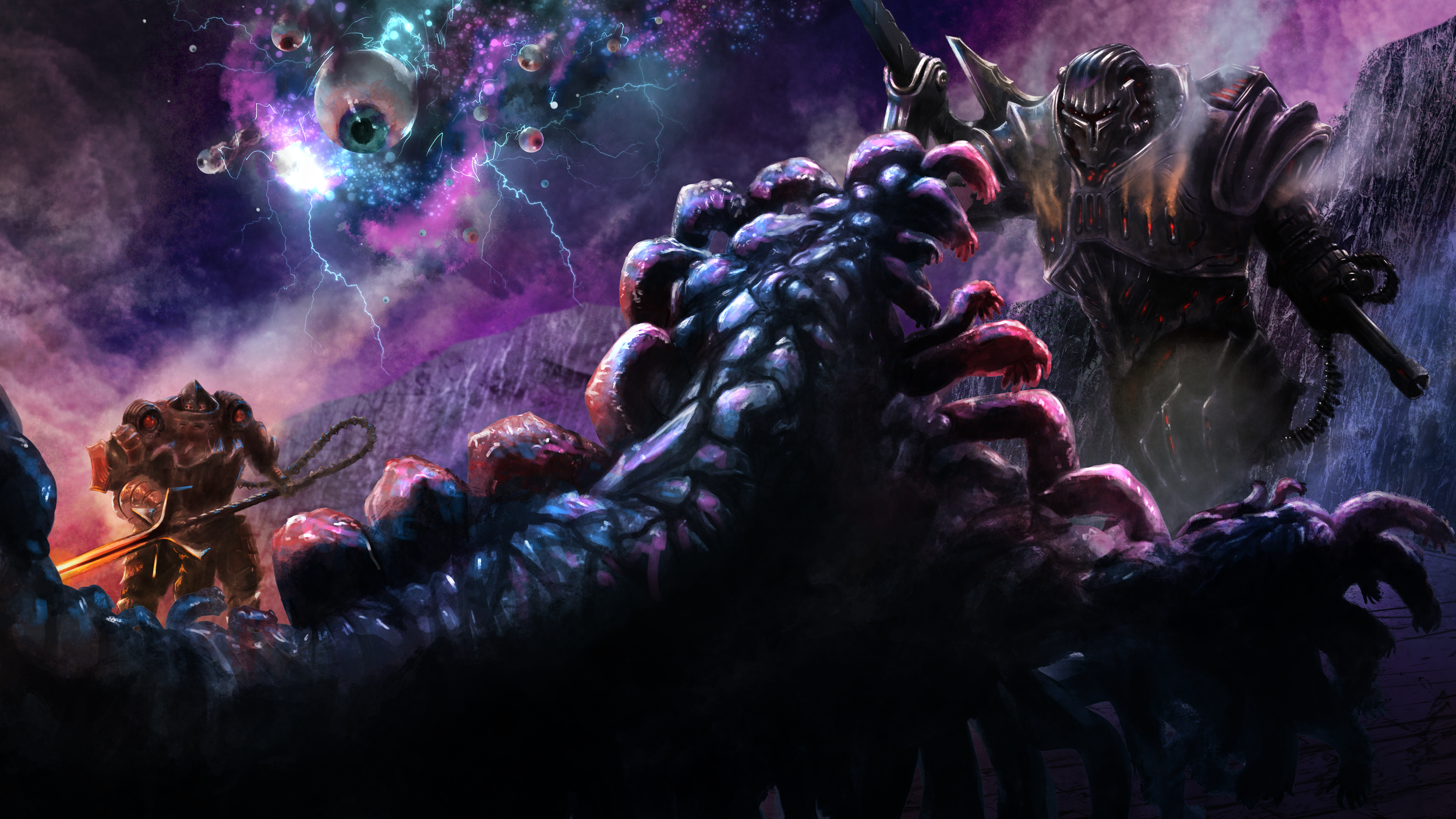
The Emberjacks are soul-fueled horrors that could act as protectors of the people, but also a troubling reminder of the cruelties of wartime.
An Emberjack chronicle could go the way of a full-blown dark fantasy epic, with the remnants of the Godkings’ military legions battling other-worldly horrors and preventing the return of their former masters. Or, it could be a self-contained story, taking the central premise that Emberjacks are beings that are remnants of an old, corrupt order to its logical conclusion. A shorter campaign could give these soul-fueled revenants a chance to go out on their own terms, symbolizing the end of the old era and the birth of something new. Tonally, my immediate thought for Emberjack was Rambo: First Blood.
TIP: The mecha combat rules in DEBT MERC and Emberjack capture the feel of piloting massive engines of destruction in battle, but offer leaner rules than many other TTRPG mecha systems, so these could be “bolted onto” other systems to offer a solution to complex mecha combat.
The Rambo film series is an ironic one, since it started with First Blood, decidedly an anti-war movie about a Vietnam War veteran trying, and failing, to adapt to civilian life. As things escalate, John Rambo ends up essentially waging war against a small town that cannot accept a returned soldier (an admittedly rushed summary of the film’s premise). Later films would see the titular character returned to warfare, glorifying the practices the first movie preached against. Emberjacks, soul-fueled soldiers created for a different time and a different conflict, could certainly be portrayed with the same sense of alienation as Rambo in First Blood.
“A world where living nightmares co-exist with PTSD can make for a deep and psychologically complex look at what an Emberjack’s experience could be in the postwar era, with every bit as much focus on the ‘monster within’ as any classic World of Darkness game.”
Where a short, tragic DEBT MERC campaign might mirror the rise and fall of a would-be rebel or an ambitious gangster, for Emberjack that First Blood comparison suggests a focus on just how horrifying and off-putting Emberjacks are to the common folk. They may be able to protect the people from the setting’s worst supernatural threats, but Emberjacks remain soul-fueled horrors and living reminders of the Godkings’ reign. With no ability to properly integrate into the society they might protect, the alienation they face could see a group of surviving Emberjacks looking for a proper hill to die on, more than anything.
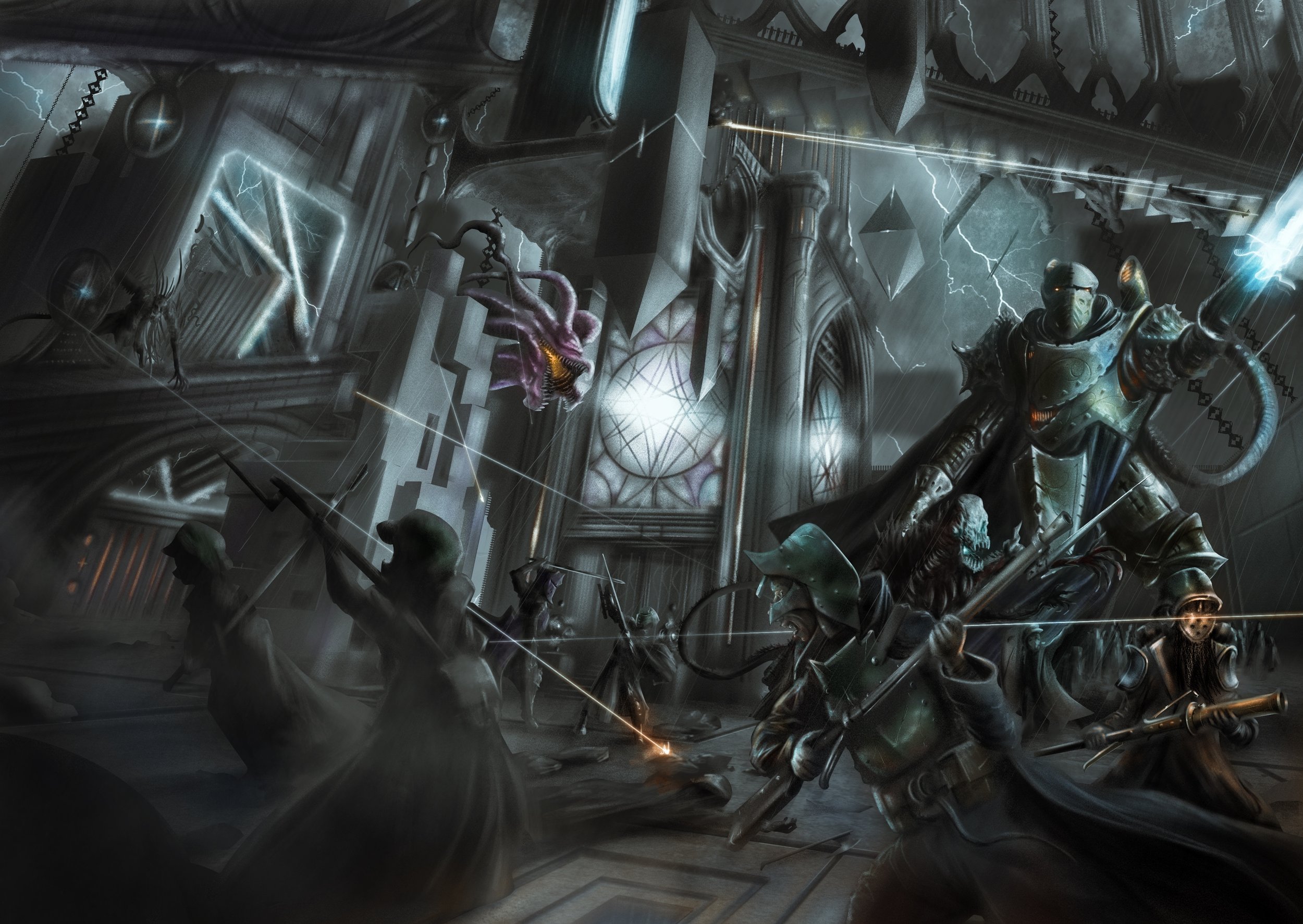
An Emberjack campaign, much like one ran with DEBT MERC, lends itself to tragic stories and impossible last stands against evil.
Whether a particular Storyteller out there is looking for the setting for their next epic Cyberpunk campaign or dark fantasy chronicle, or just a simple and approachable mecha combat system to bolt onto another game’s system, the DEBT MERC and Emberjack double campaign book has plenty to offer. I also recommend STs look to the idea of running short, tragic stories in both settings. Even if the intent is to run a grand campaign that sees the capitalist system of DEBT MERC torn down once and for all, a short adventure that humanizes all the mercs who don’t survive to see their debt paid down can add context and emotional investment to the world.
Pledging $1 USD as a reservation for the DEBT MERC/Emberjack Backerkit crowdfunding campaign earns $10 USD off of the price of the hardback book version of the dual TTRPG games.
By the same token, STs could dive right into a full Black Company inspired saga, with Emberjack, or open with a cross between First Blood and Jacob’s Ladder. A world where living nightmares co-exist with PTSD can make for a deep and psychologically complex look at what an Emberjack’s experience could be in the postwar era, with every bit as much focus on the “monster within” as any classic World of Darkness game. While some see the goal of TTRPGs as “winning,” the real win condition is memorable and engrossing dramatic experiences. Few games offer Storytellers better options for such vivid tragedies as the pairing of DEBT MERC and Emberjack.