
We have our heading! Let’s make a one-shot map.

A Map. The corner piece of every adventure, both real and imagined. Without it, we wouldn’t have a destination, or a heading. We wouldn’t know where we are going, or where we’ve been. And yet, how often is a map really important?
As we wrap up the year, we will be wrapping up a series on writing one-shot adventures with talking about maps. In my last article we wrote a one shot adventure, and now let’s go over how to make some cartography. But before we go over the best strategy to make effective maps, here’s probably the hardest thing you’re going to have to hear.
You don’t need a map (For most of your adventure)
No. Seriously. This article is not a tease, I will go over how to come up with a map, but in many cases you may not actually need a true ‘map’ to run your oneshot. If your one-shot’s combat takes place in an open field, a simple grid may suffice just to keep positions. These days, most game stores will sell dry erase grid maps like these that you can use blank or use a dry erase marker to draw simple shapes. I like these because you can use markers to draw areas of effect as well.
(Pro tip, if you do print out maps, it may be worth investing in a sheet of acrylic a bit larger than your printouts. Instead of laminating each printed map, you can place the acrylic over the print and use it as a dry erase surface. I did this for my Actual Play to allow my players to keep notes on where they had been, and to draw out areas of effect)
So that all being said, you’ve decided that for your oneshot, maybe you do need to prepare a map in advance. Alright, …
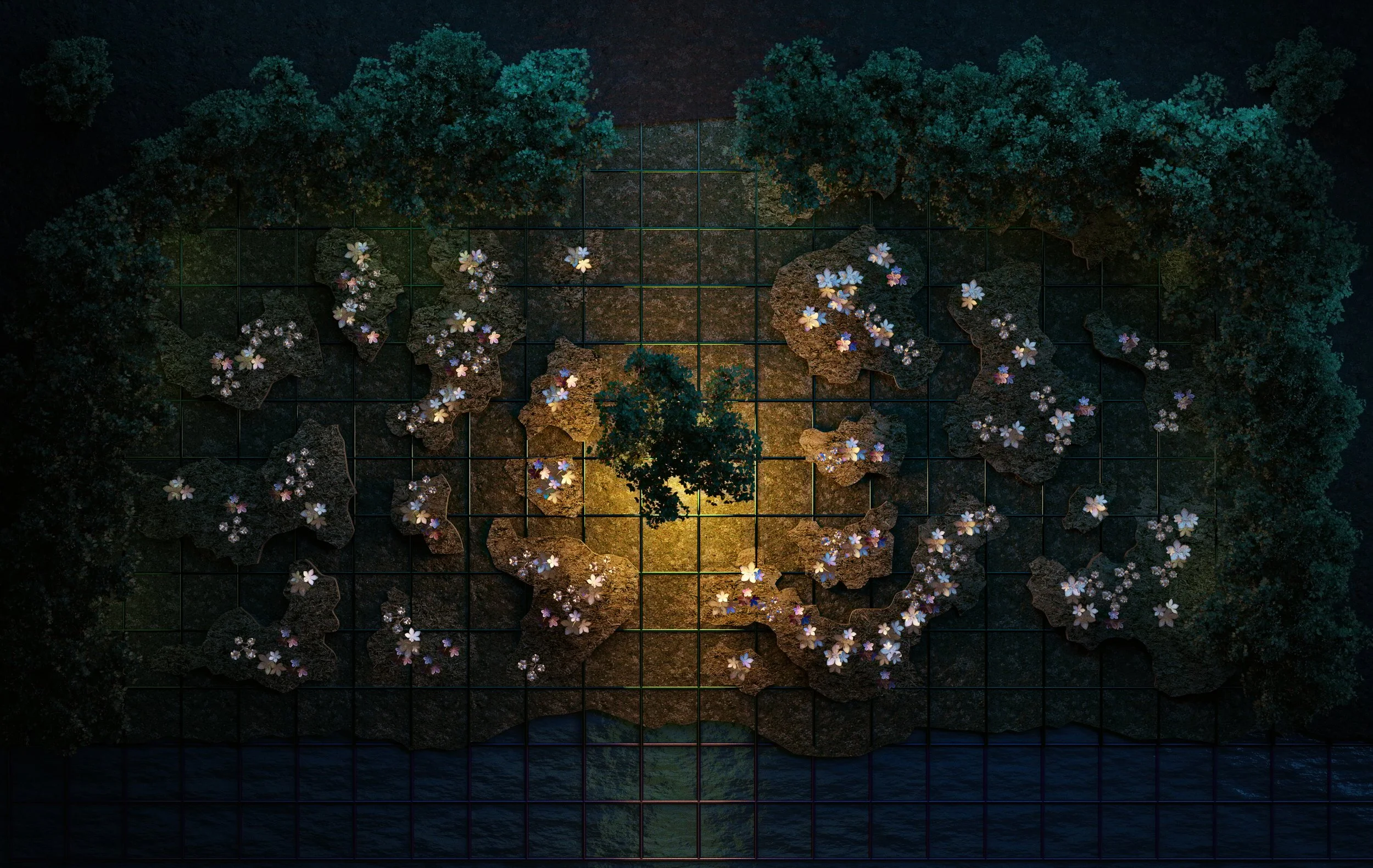
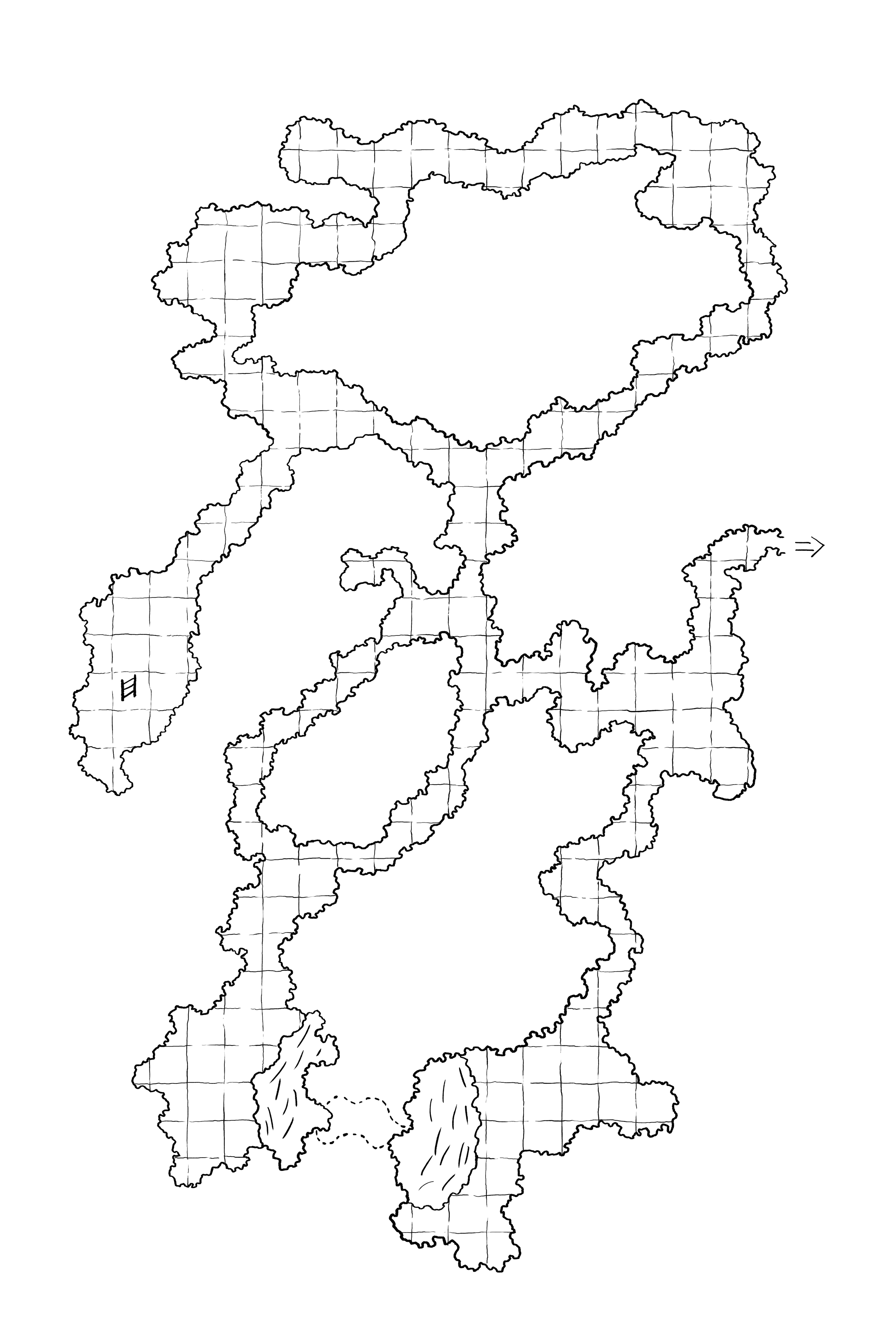
The Still Garden from The Black Ballad
Let’s draw a map.
Now, second piece of advice: your map does not have to be complex. The map above is from Storyteller’s Forge’s Black Ballad. It’s beautiful in its illustrative quality, and if that’s what you want to draw, go for it. Your players will love you. But form my perspective of practicality and sanity, I prefer to draw simpler maps for one off homebrews for two important reasons. One, they’re faster to make. And two, I can print them out at the local printshop for maybe 2-3$ per sheet. Here is a sampling of a few maps I’ve drawn in my career for my homebrew adventures, and these all took me a maximum of maybe one hour to draw up. (Feel free to download and use them too!)
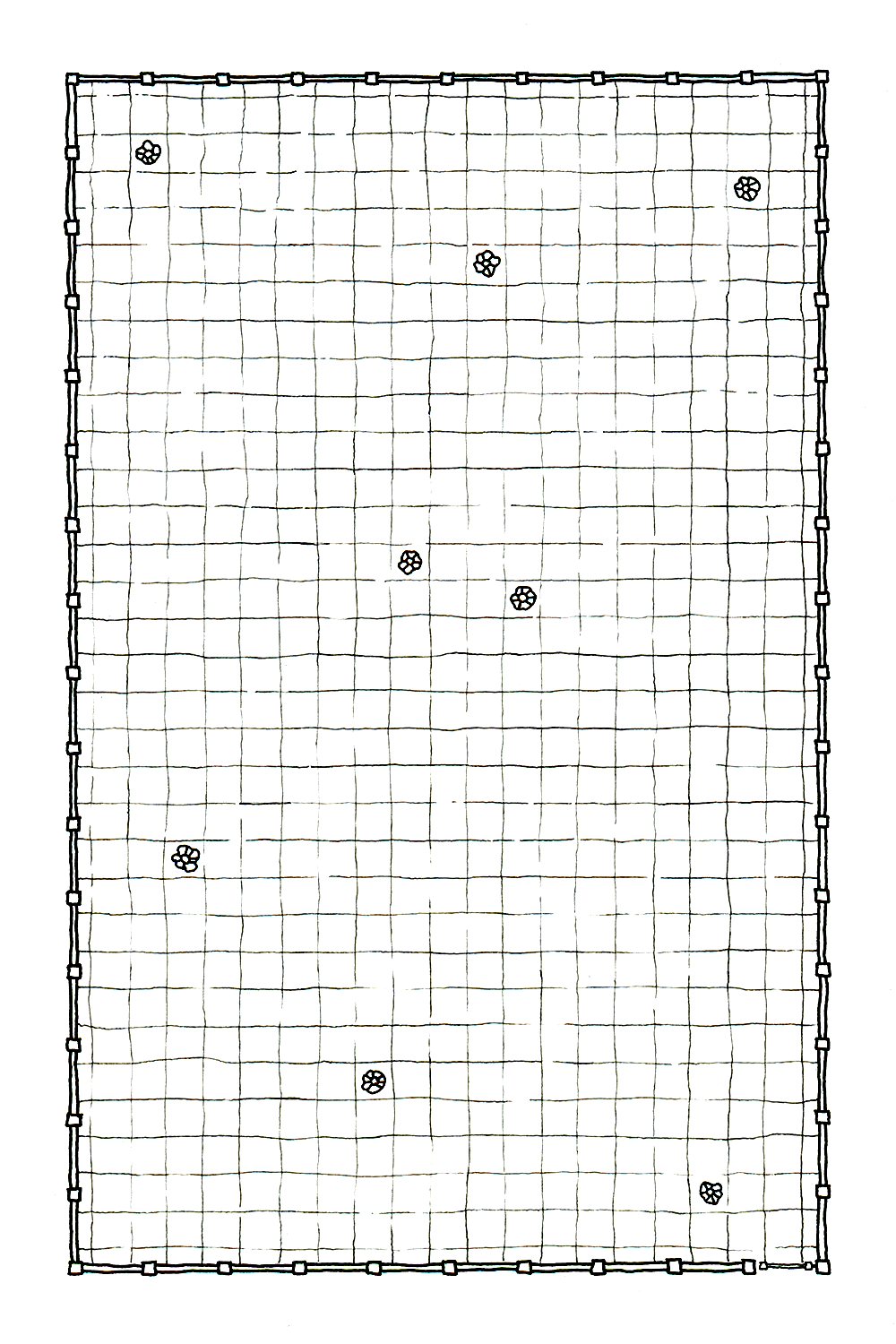
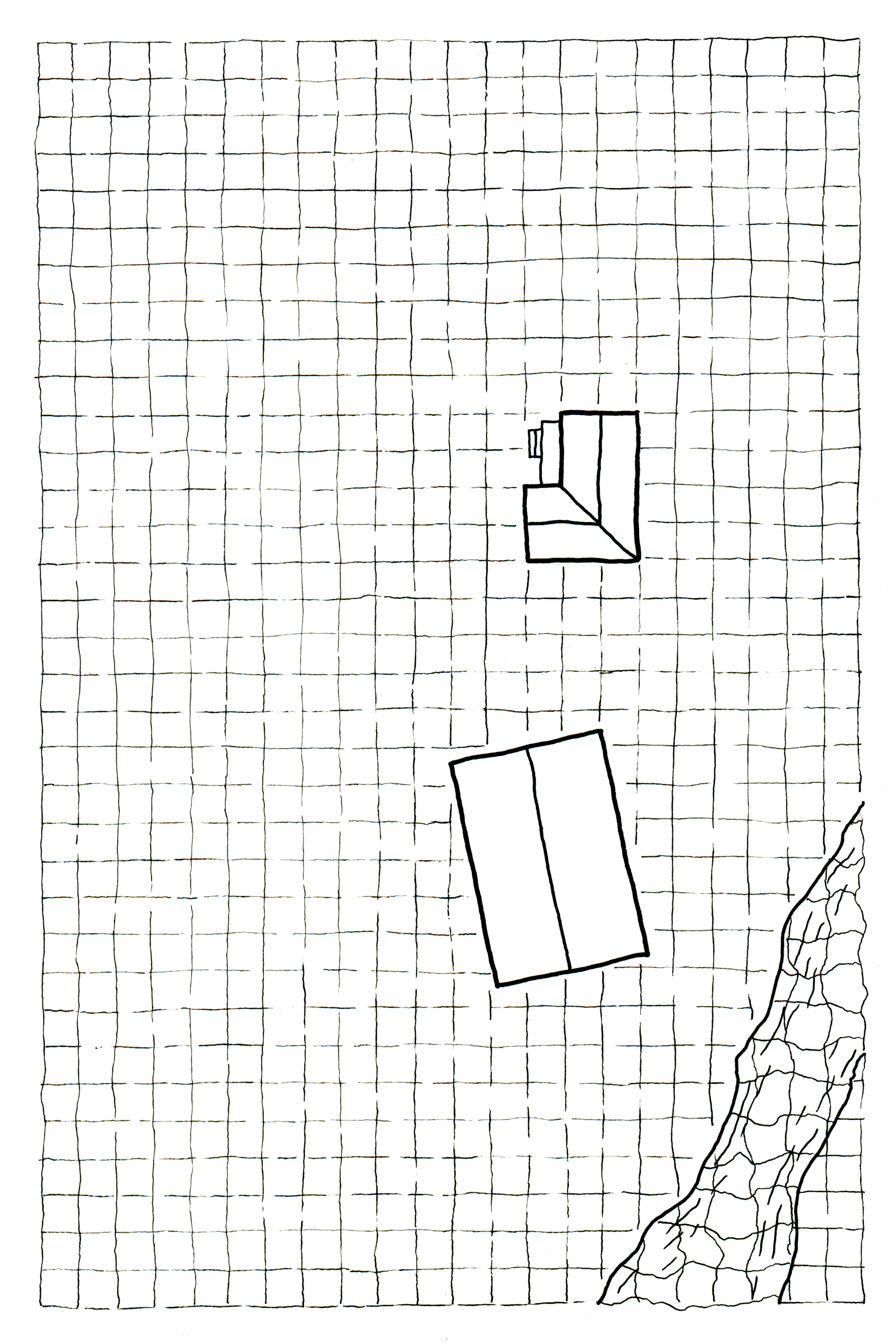
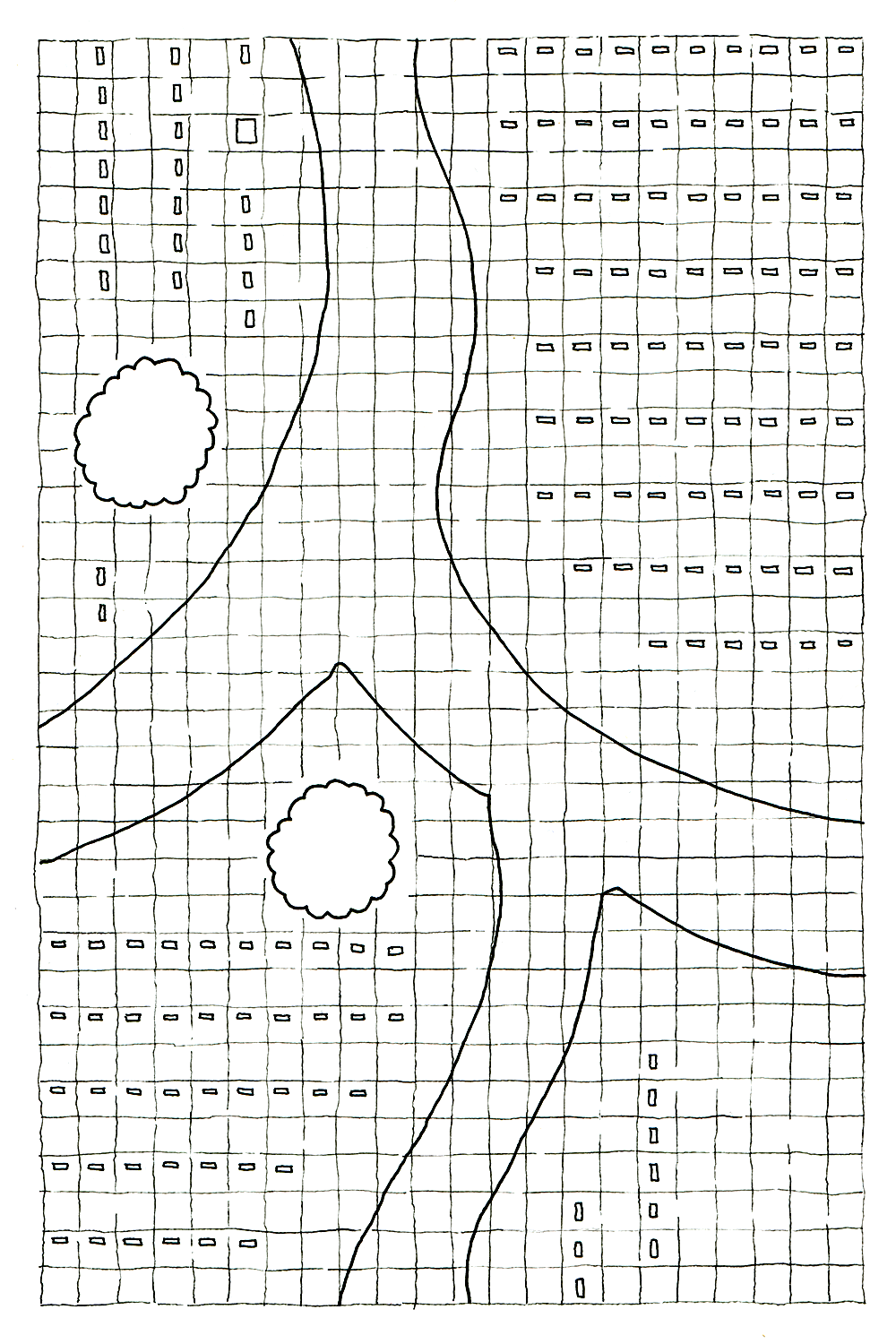
Remember, your Map Only needs as much as is required for the story or combat you’re running.
For this article, I’ll show you how I drew this simple closed quarters map for a combat that takes place in a basement.
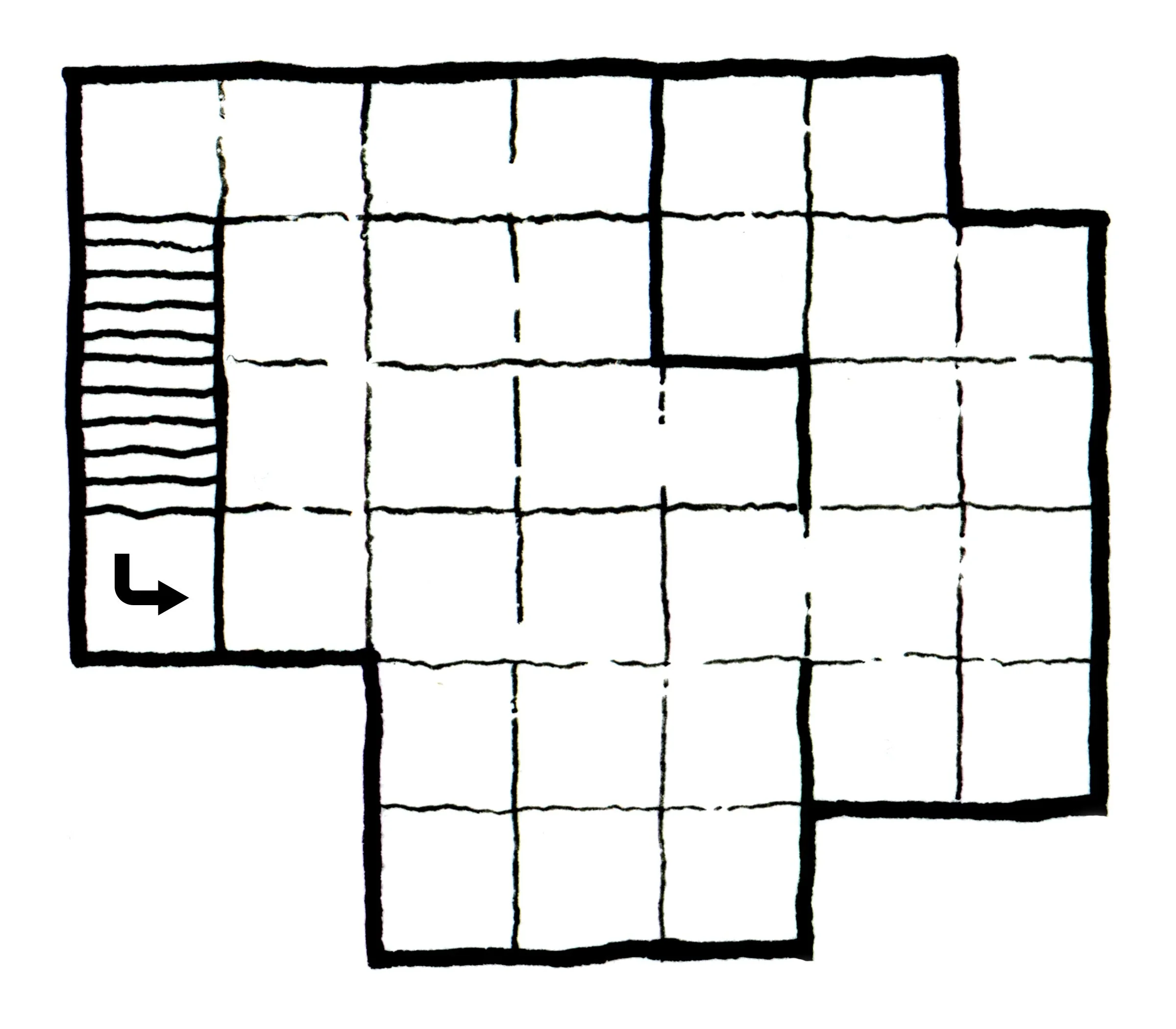
In reality, a basement or apartment space will not be extremely large. And while this may be good for close quarters combat every once in a while, you still need to make sure the entirety of your party can fit on the board. I like to design my maps backwards from the combat I envision. I start by listing the number of combatants, including players and monsters, the combat style of the monsters, and then build a space based on how they would fight. I sometimes draw my maps out with pencil and grid paper, but occasionally I use Dungeon Scrawl, just to bat ideas around, and that’s what I’ll be doing here.
For the above map, it was built for a basement combat between four party members and a single swarm of rats. In reality, a basement may be at most 20x30 feet, and Reality is a great place to start, so let’s begin by drawing a map which translates to a 4x6 grid.
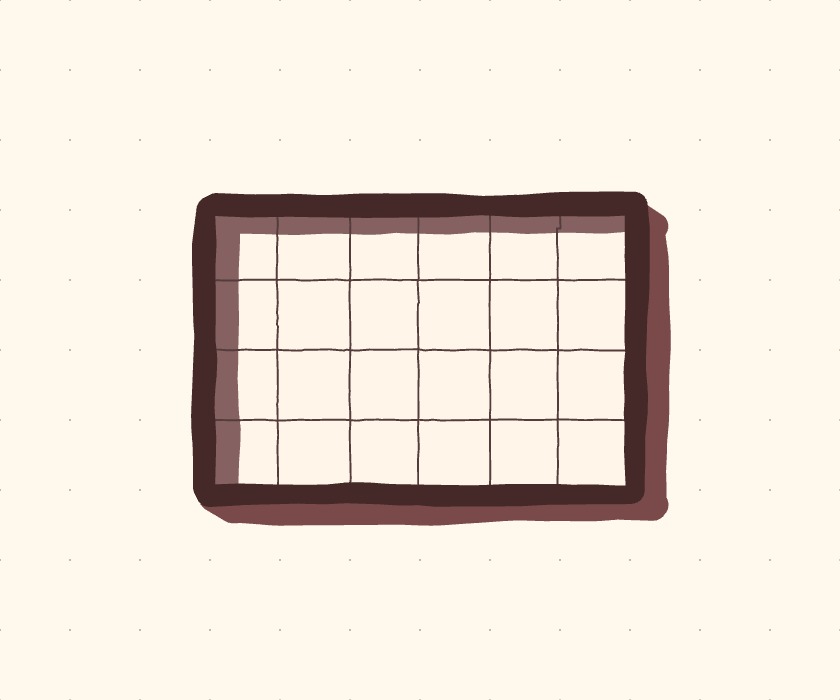
That’s not… bad but it feels just a touch tight. Moving around other combatants could get crowded quickly, and although it might be serviceable, I like to have just a touch of breathing room, so let’s make our map is 30x35 ft. Not too much bigger, but just enough to allow for some movement.
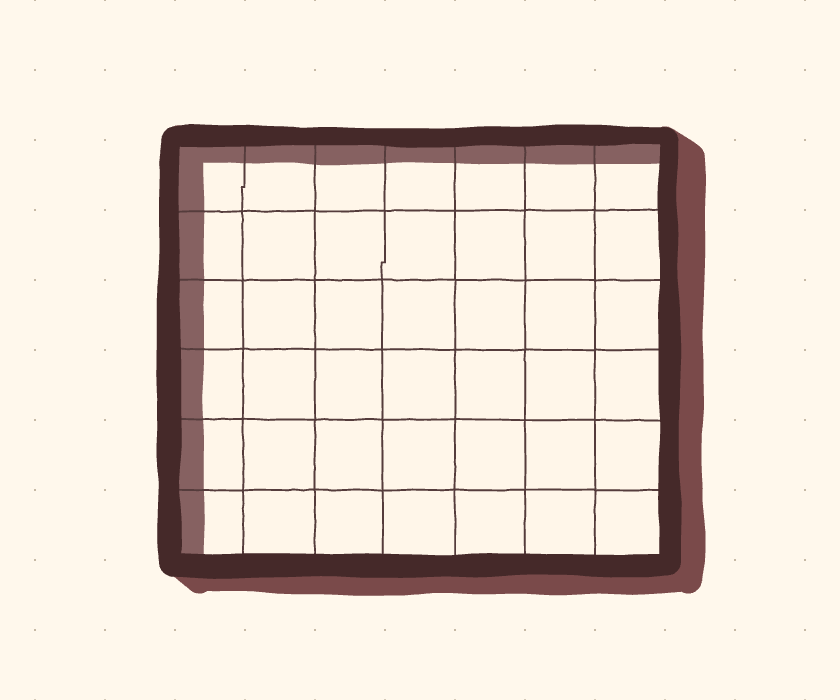
Now it’s got some room, but paradoxically, we have made it too big. Here’s when the mapmaking fun comes into play. While we could definitely make this map a rectangle, few spaces in the world are perfect rectangles. So let’s add some dynamics. How you change this around is entirely up to you, but add some cutouts and start making an interesting shape.
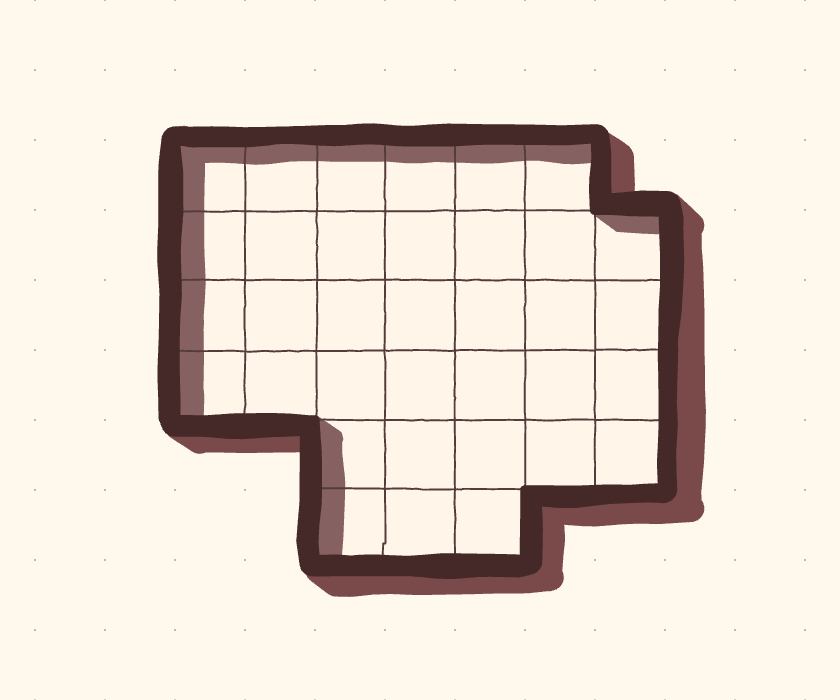
Now it feels like a space something might happen in. You could leave it here if you like, but I still want a tiny bit of that ‘cramped basement feel’. I also want to remind my party it’s a basement, so I split the map into two rooms and put in a staircase.
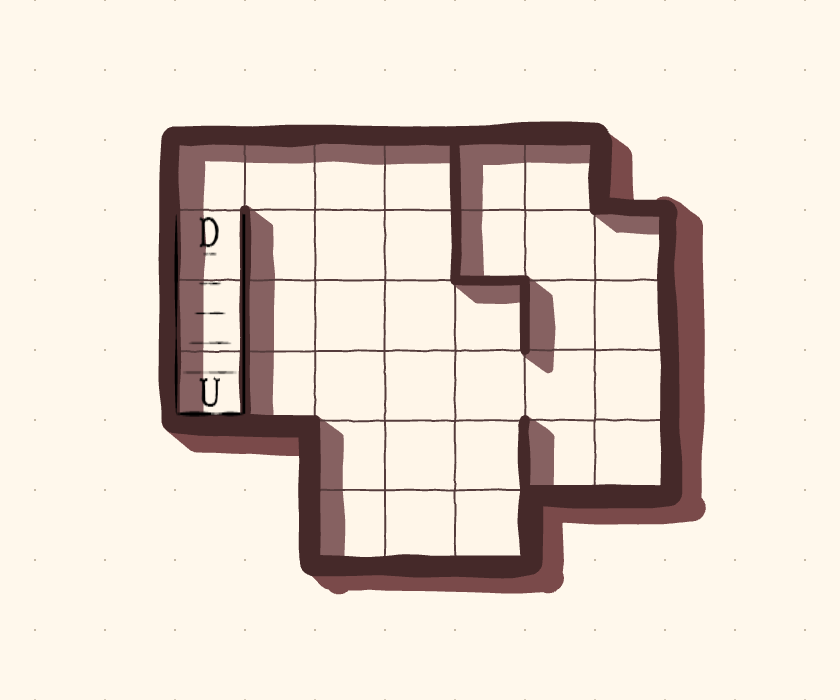
And just like that, we have a map. Interesting note, the main room is still 20x30ft, but add some retreat spaces and a staircase, and you’re a tad more organic. Now that I’ve shown you how to do it, give it a shot yourself!
Closing Thoughts
Now that was a method to draw a map for a small space. Larger spaces will of course require more time and creativity, but my biggest lesson I can teach is approach your map design with practicality of the game in mind. Complex maps can be fun but if they hinder gameplay, that’s when you know you’ve gone too far.
Try your hand at it and share some of your maps with us. And don’t worry, in a future article, I will be covering much more complex mapmaking for larger dungeons in longer campaigns. But all my maps started like these, simple rooms with a little bit of toying around.
Until next time, may the rolls be ever in your favor!
Zia Ellithiel is a game artist and forever Game Master, who has been running D&D fifth edition adventures for over ten years. You can connect with her on Bluesky at @spacegothprincess.