Some Storytellers seek out campaign settings and starting towns that check all the heroic fantasy boxes, places that could easily host almost any prewritten adventure with few tweaks needed. I’ve always gone in the exact opposite direction. I prefer the settings that inspire stories that could only be told in that particular fictional world, leveraging the things that make it unique. I am also a big fan of urban adventures, and weird and offbeat cities hold special appeal to me. As we are in the Halloween season, I wanted to highlight three spooky cities that blur the lines between the dead and the living, and how each offers distinctly different storytelling potential.
“In Eidolon, a fallen PC could become a ghost inhabiting a haunted weapon that another PC, or even the same player’s new character, might wield, seeking vengeance in their name.”
I had the pleasure of playing a one-shot adventure run by Keith Baker in the new Daggerheart campaign setting created by Twogether Studios, Eidolon: The Ghost Market. Eidolon certainly fits in the same category as Nox Valar, the primary city featured in The Black Ballad, as a city of the dead that is a perfect venue for Halloween-themed Tabletop RPG adventures. Keith Baker is, of course, a rockstar in the TTRPG space, as the creator of the beloved Eberron campaign setting, and his world-building skills are certainly on full display with Eidolon. Again, I’m a sucker for urban adventures in unique cities, like Nox Valar and Eidolon.
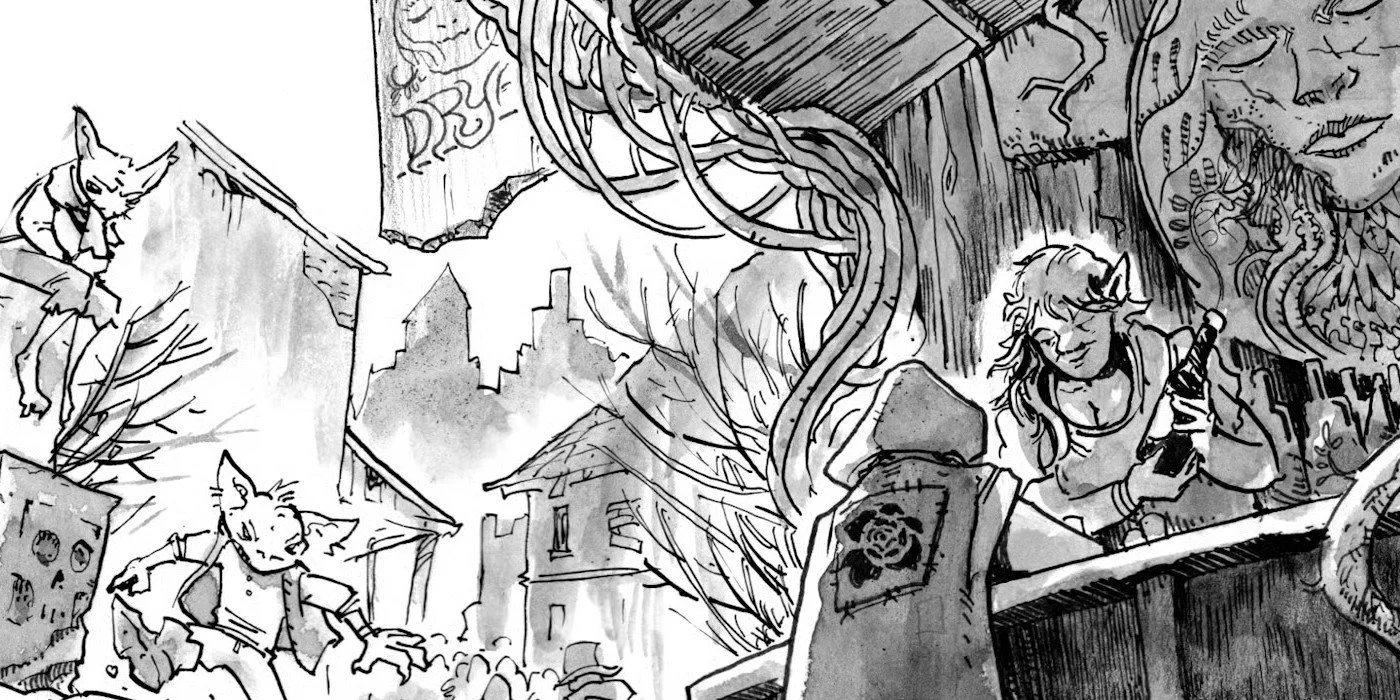
Eidolon: the Ghost Market contains traditional fantasy races like Dwarves and Elves along with oddities like the Fungril, a fugus-based species with a hive mind.
Each of these fantasy cities has some common ground, but also some key differences. A campaign could easily include both, in fact. Eidolon is a city in the prime material plane where ghosts are commonplace and commodified. Nox Valar is the capital of The Sunless Crossing, a Purgatory realm where dead souls dwell as they await either resurrection, or their final judgment and eternal afterlife. Both are designed to be relatively setting agnostic, meaning a Storyteller could plug Eidolon into any appropriate corner of the campaign setting they are using, or their homebrew world. Similarly, the Sunless Crossing and Nox Valar can take in the fallen adventurers of any world.
Eidolon: The Ghost Market has successfully funded on Backerkit, and it has already reached all of its stretch goals. Pledges range from $25 USD for a PDF copy of the book, to a $192 USD “All In” pledge level featuring physical goods such as dice, maps, and a screen for the ST, among other items.
Eidolon reminds me of one of my favorite “cult” classic campaign settings, my second favorite of the 3e-era D&D official offerings, behind Baker’s own Eberron campaign world: Ghostwalk. That book was released in 2003, with a page count right around that of Eidolon’s expected 200 pages, and it was authored by Monte Cook and Sean K. Reynolds. Like Eidolon, Ghostwalk detailed a single city, called Manifest, where the boundaries between life and death are blurred. The twenty session or so “mini campaign” I ran in Manifest is one I still remember fondly, and it absolutely fit the bill for a Halloween-themed adventure.
“The titular city in Eidolon is controlled by the Ancient Houses, powerful families led by immortal beings that feel like a cross between Drow houses of Menzoberranzan in Forgotten Realms and vampiric clans from Vampire: the Masquerade.”
Per the blurb on the back of the book: “The city of Manifest rests atop ruins from ancient times and far above the entrance to the land of the dead. Here, the world of the living is shared equally with the deceased, who linger in physical form before finally passing through the Veil. Whether currently living or dead, residents and visitors are assured of an eternity of action and intrigue.” Eidolon and The Black Ballad also both offer answers to the question of “what to do with a Player Character after they die.” In Eidolon, a fallen PC could become a ghost inhabiting a haunted weapon that another PC, or even the same player’s new character, might wield, seeking vengeance in their name.
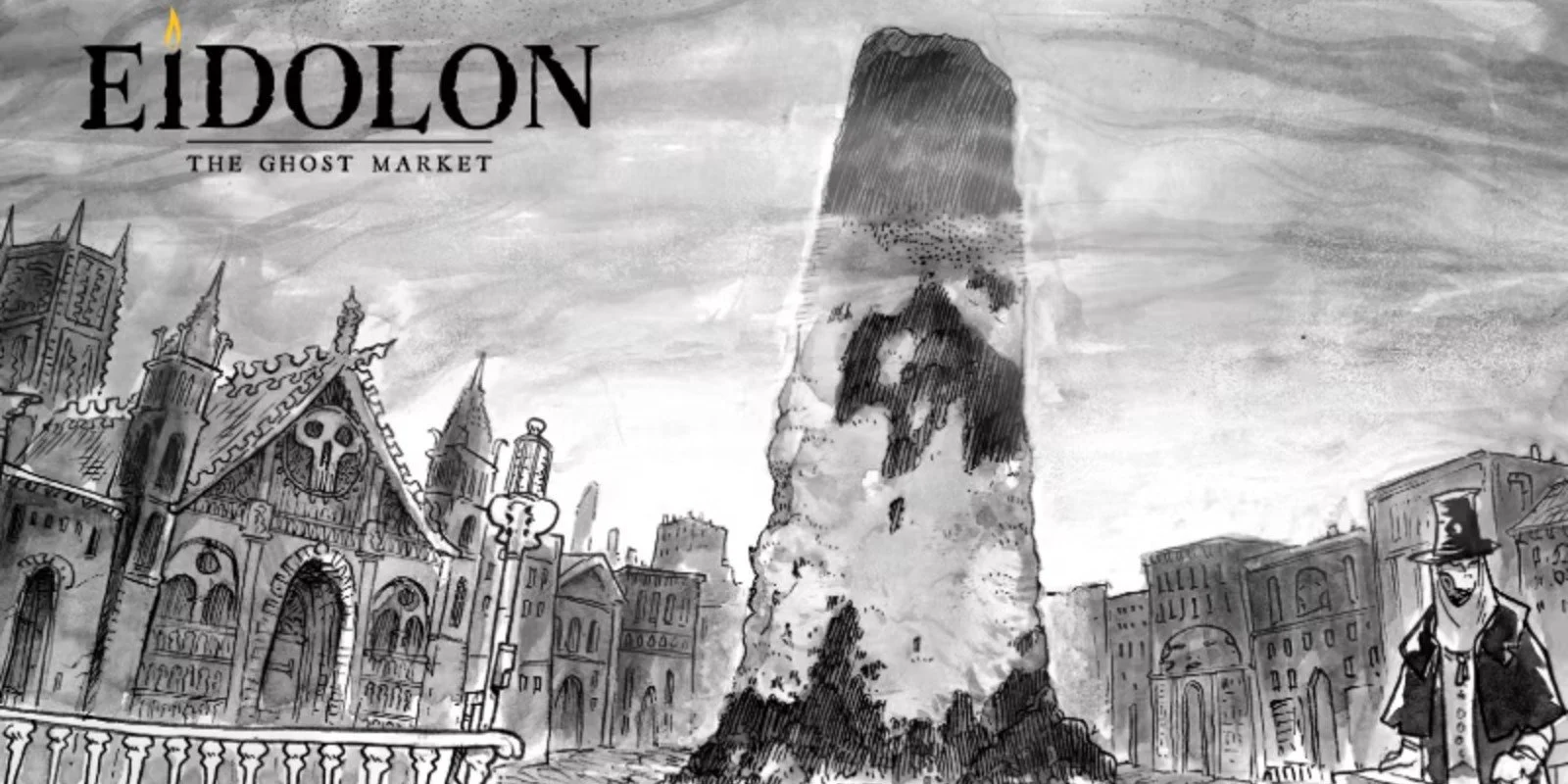
The Narrativist elements of the Daggerheart system are in play in Eidolon, allowing elements of player collaboration in the game’s narrative.
The Black Ballad offers an entire campaign that can take place after a Total Party Kill, giving the whole slain crew an adventure in Purgatory. If the ST follows the pre-written adventure within The Black Ballad, they’ll learn about the politics of the “in between place” of the dead, the key figures of its capital, Nox Valar, and undertake an adventure that might reshape death across the multiverse. Manifest, the city featured in Ghostwalk, offered a third option. It is thematically similar, as ghosts remain “manifested” in the city, allowing the living and the dead to comingle freely. Each of these cities highlights the eerie storytelling potential of interactions between the living and the dead.
One Eidolon Campaign Frame is “The Catering Crew,” where the heroes pose as caterers to infiltrate the households of Ancient House nobles to seal away dangerous spirits of the underworld called Shadows that pose a threat to all life in the city.
Where the central government of Nox Valar is generally well-intentioned, and the threats to the Sunless Crossing primarily come from external sources in The Black Ballad’s expansive adventure, the powers that be in Eidolon are inherently sinister. The titular city in Eidolon is controlled by the Ancient Houses, powerful families led by immortal beings that feel like a cross between Drow houses of Menzoberranzan in Forgotten Realms and vampiric clans from Vampire: the Masquerade. The Castagars are actual vampires, but each Ancient House has a unique path to immortality. The Antidoras are Necromancers. The Ashblinds are a Dwarven-led family that binds their elders’ souls into metal objects passed down to their descendants.
“The Black Ballad’s Nox Valar is not about the fear of death, as most residents have already crossed that bridge. It’s about looking back at life, making peace with death, and pondering what lies beyond Purgatory in the true afterlife.”
Rounding out the list of Ancient Houses, the Drakalovs are somewhat akin to the Toreador clan in Vampire: the Masquerade, as an artistic bloodline that also studies alchemy and sorcery. The Ushants, the final Ancient House, fully fit the mad scientist archetype, furthering their knowledge with inhumane experimentation. Keith Baker’s ability to take familiar elements of mainstream fantasy “canon” and put unique spins on them, while tying it all together with cohesive worldbuilding, made Eberron an all-time great. That same setting-crafting skill is on display in Eidolon. These factors alone set up some clear distinctions that set Eidolon apart from the other two “grim cities of death.”
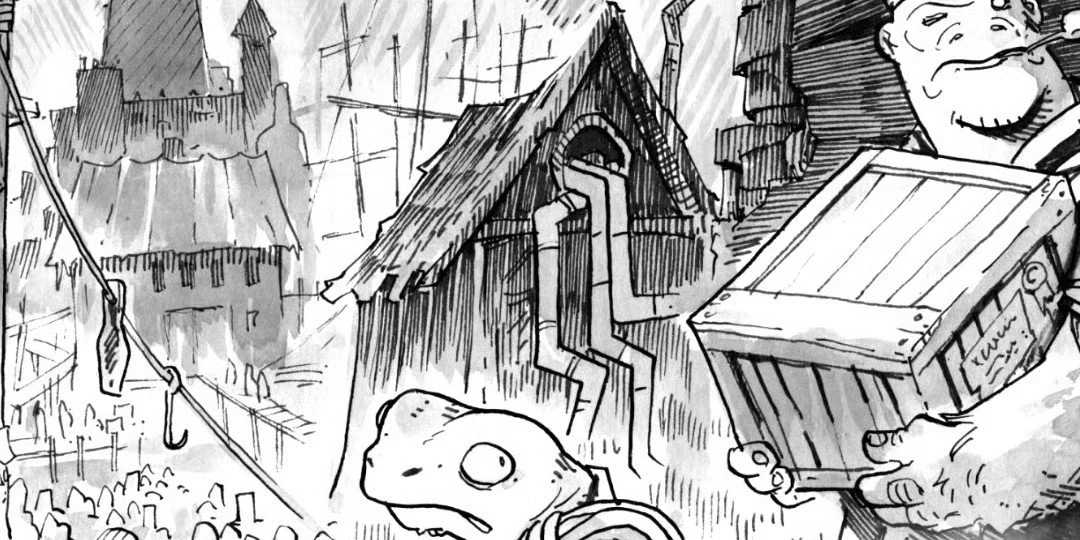
As with the Eberron campaign setting’s establishment of the magic of Artifice, the lore of Eidolon showcases how a city where ghost-possessed armaments and equipment are commonplace organically emerged.
In a Black Ballad game, almost everyone is dead. A living person is a unique outlier in The Sunless Crossing. The setting itself is ran with good intentions by its leadership, and the cosmic threat of The Scarlet Malice comes due to the intervention of outside forces. In a Ghostwalk game, the living and the dead freely interact in Manifest, where the normal rules of life and death don’t apply. In Eidolon, the use of ghosts as resources has been fully integrated into the city’s economy and social norms, not unlike similar practices seen in Crystalpunk, by Plus Three Press. Eidolon and Prismatic Falls – the primary city elaborated on in Crystalpunk – both apply a Cyberpunk mentality to their dark fantasy settings.
The second Campaign Frame, “The Boneriggers,” engages with the Cyberpunk genre-inspired themes of Eidolon, bringing the fight to the immortal overlords of the Ancient Houses that control the city.
Eidolon has plenty of threats within its own walls, as the Ancient Houses are sinister and corrupt, and attempting to bring them down is a massive undertaking. They serve as a replacement for the Megacorps of the Cyberpunk genre, essentially. They are monolithic powers that, to most citizens of Eidolon, are as inevitable as forces of nature. The Eidolon book offers two Campaign Frames, a Daggerheart narrative concept in which the core premise of a campaign is laid out in an easy to digest format. One Frame features the players as members of an underground resistance battling the corruption of the Ancient Houses. The other has the players rubbing elbows with the corrupt elite, in order to seal away a more elemental and existential evil.
“Eidolon is an excellent new option as a creepy playground to engage in anything from low-stakes spookiness to a gripping struggle to overthrow immortal tyrants, wielding the ghosts of fallen patriots in your fist as you continue their struggle.”
Selecting between these thematically similar, but ultimately vastly different, cities, would probably come down to what tone I want for a Halloween season adventure. The Black Ballad’s Nox Valar is not about the fear of death, as most residents have already crossed that bridge. It’s about looking back at life, making peace with death, and pondering what lies beyond Purgatory in the true afterlife. The reality of the ghosts of the city’s dead dwelling in guns and communications devices all across Eidolon makes the low value of life for the average citizen plainly evident, in that city. Death is ever-present, and the setting begs you to take risks to ensure that life is worth living there.
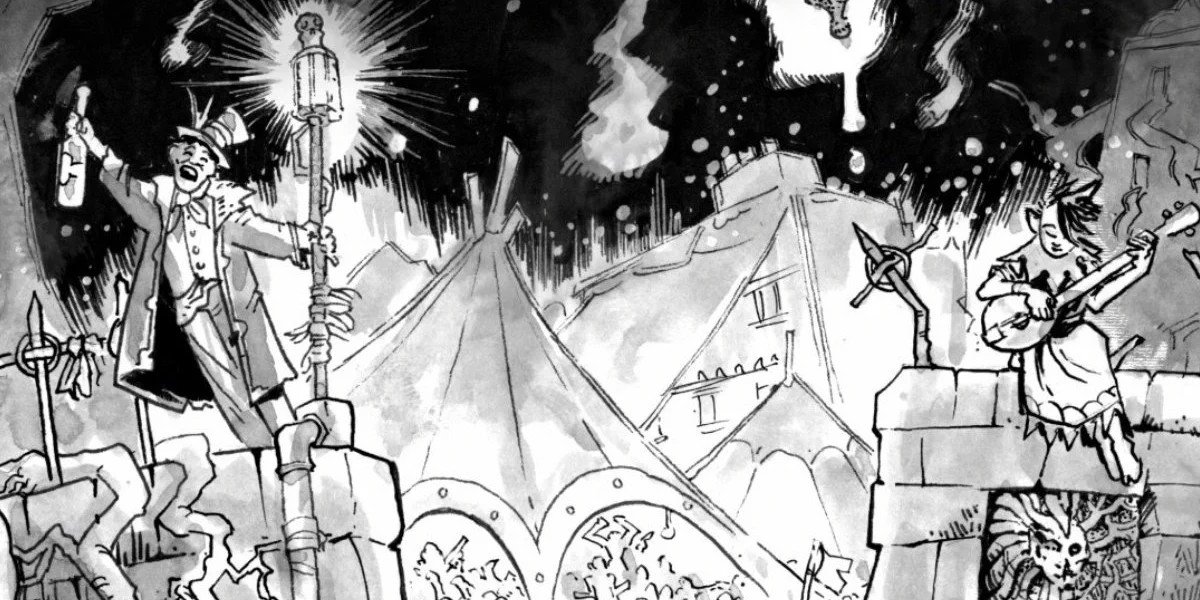
A free 20 page Gazetteer is available entitled Welcome to Eidolon, and it can be downloaded for free from Heart of Daggers.
Manifest, of Ghostwalk, perhaps unsurprisingly straddles a middle ground. Life and death are less divided than elsewhere, and those slain simply transition into another sort of being that can continue to go about their “life,” so to speak, in that city. A multitude of Halloween traditions, and similar real-world cultural festivals, focus on the relationship between the living and the dead. The setting you pick can determine the tone you find most appropriate. For a game about the fear of death, I would pick Eidolon. To vicariously experience death, Nox Valar is the obvious choice. Lastly, for a city that embodies that idea that life and death might not be so drastically different, just different stages in a personal journey, Manifest stands out to me.
Keith Baker and Jenn Ellis’ Twogether Studios is also working on Infinite, a setting for Plotweaver, the TTRPG system featured in the Cosmere RPG.
Not every Halloween-themed game aims for true horror, and striking a sense of dread into players themselves. When people describe a “spooky” game, sometimes that can be as simple as the aesthetics of the adventure, but it can also come from stories whose themes dwell on death and the macabre. Eidolon is an excellent new option as a creepy playground to engage in anything from low-stakes spookiness to a gripping struggle to overthrow immortal tyrants, wielding the ghosts of fallen patriots in your fist as you continue their struggle. Daggerheart fans will find a lot to like in Eidolon, but the city is robust enough that it could work with nearly any modern fantasy TTRPG, and nearly any fantasy setting, for that matter. Almost any game can use a city where ghosts are a hot commodity, and powerful immortals control commerce and nearly every other facet of life.