One Piece Is A Masterclass On D&D Adventuring Days
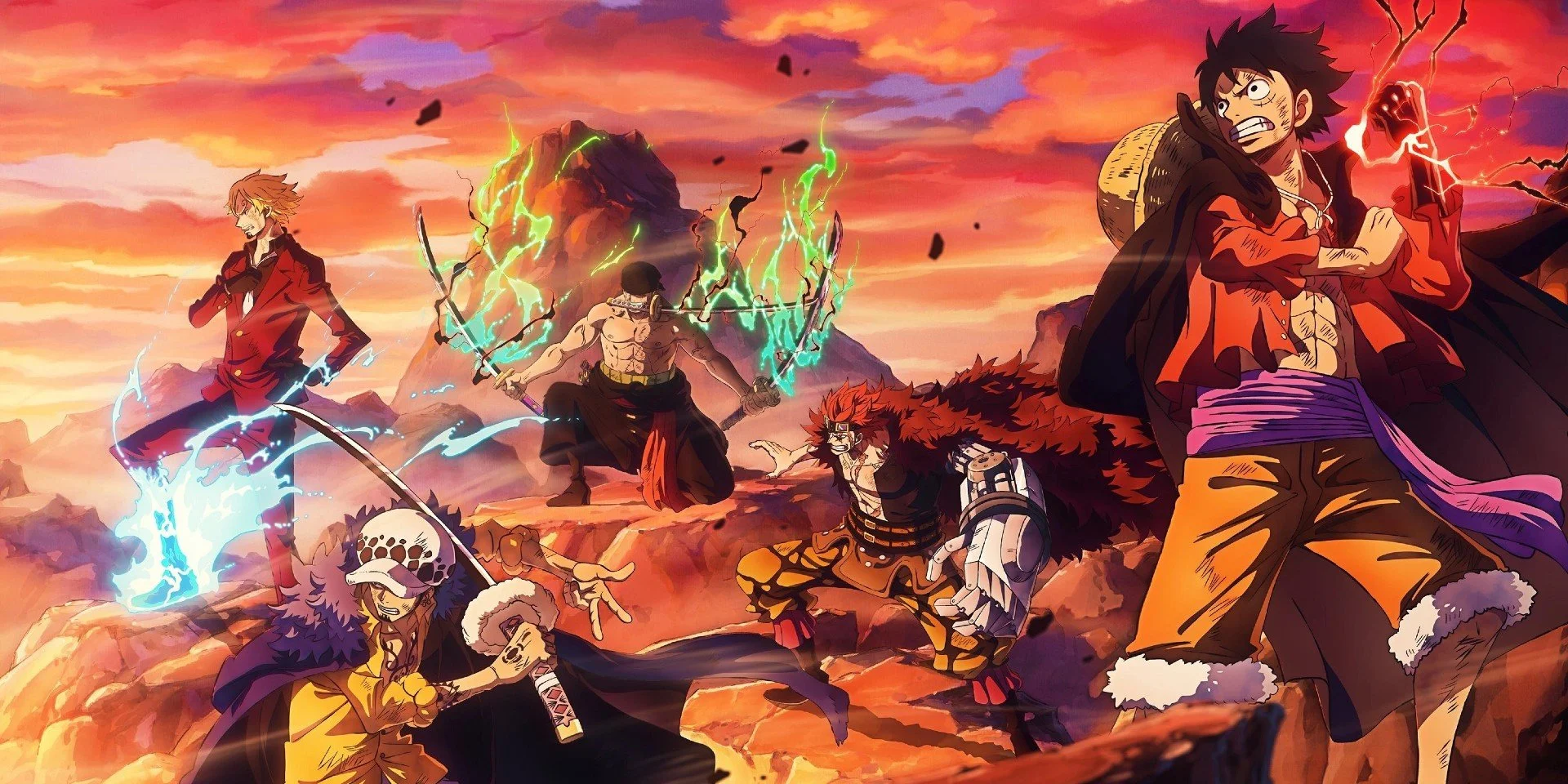
The popular Manga and Anime series One Piece shows Storytellers how to structure Adventuring Days with numerous battles.
If any Storyteller hasn’t learned that they need to adjust the way they structure their narratives based on the tabletop RPG system they’re using, then they’ve probably only used one tabletop RPG system. Any sort of crunchy “gamist” tabletop RPG system, where balanced and challenging combat encounters are part of the game’s design, will typically have a sweet spot for the frequency of battles. Not every system falls into this paradigm. While 5.5 Dungeons & Dragons still works best with six or more combat encounters per adventuring day, Call of Cthulhu games might only see direct conflict once (usually when the campaign ends in unexpected violence).
I’ll be mainly addressing 5.0 and 5.5 D&D with this discussion, since it is the ubiquitous gravitational mass that sucks up most of the attention in the TTRPG hobby space. Many Storytellers prefer to run a sandbox-style game where combat “happens when it happens.” That’s all good and well, with the right RPG to match that style, but 5e D&D is not the system for that. Though the 5.5 rules have done their best to bury it, the reality remains that the Adventuring Day concept that was spelled out in the 5.0 Dungeon Master’s Guide remains central to the game’s balance.
“The story establishes the antagonist and then provides a reason for a sense of urgency, culminating in one grueling day where a ticking clock forces the heroes to push themselves to their limit and beyond. This is the essence of an Adventuring Day in a tabletop RPG.”
For over a decade, Storytellers who read the DMG guidance that recommended six or more combat encounters per Adventuring Day seemed to have struggled with the concept. Everyone has their own coping mechanism. Some choose denial. “They didn’t just mean combat encounters, this includes social encounters, traps, and wilderness encounters, surely.” (It does not.) Others accepted the advice at face value, but ran into the problem of “How could I possibly get six or more combat encounters into a single day”? Since the DMG failed to address this, we obviously have no recourse but to look to Shonen Anime for guidance.
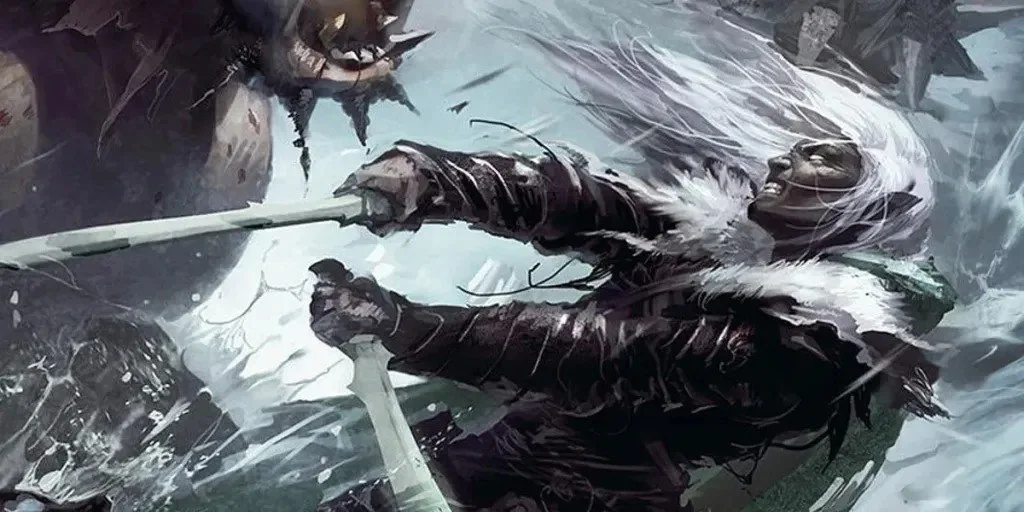
Few Heroic Fantasy novels include a proper Adventuring Day’s worth of combat encounters in a single in-fiction day.
Shouldn’t the inspiration for a Heroic Fantasy game like Dungeons & Dragons be Heroic Fantasy novels? Maybe, at least in terms of tone and overall concepts, like world-building and overarching narratives. Outside of some of the more carnage-heavy works by R.A. Salvatore, most Heroic Fantasy fiction is inconsistent on whether it routinely puts the protagonists through multiple life-or-death battles in the same day. One Piece, however, is a great point of reference. It’s the world’s best-selling comic series (sorry, Superman and Batman), so odds are that someone in any gaming group (or someone they know) has taken the plunge into the Grand Line.
Japanese RPG video games, or JRPGs, might also seem like a go-to for D&D inspiration, but when it comes to creating the urgency needed for Adventuring Days, they teach all the wrong lessons. The gameplay loop of JRPGs often sees players journey from a town with an Inn, or some other recovery point, to power-level at their leisure, before eventually tackling a dungeon. Even when the story seems to have narrative stakes, the games will rarely enforce these in any way. When the extinction-level threat of Meteor is literally visible in the skies in Final Fantasy 7, that’s exactly when the game encourages players to pursue hours of unrelated optional side quests.
One Piece Showcases Storytelling That Creates
Epic Adventuring Days Supported By The Narrative
One Piece consistently nails Adventuring Days. One of the most popular arcs of One Piece is Wano. The Japan-coded island nation is ruled by a corrupt shogun, backed by a cruel, ruthless pirate Emperor of the Sea named Kaido. After a lot of build-up and intrigue, the heroes determine that the only time Kaido will be truly isolated and vulnerable will be during the Fire Festival, when Kaido and the Beast Pirates will be celebrating on the island of Onigashima. For anime fans, the raid on Onigashima extends from episode 983 to 1077, and in the manga, it lasts from chapter 978 to chapter 1050. The Onigashima Raid is an Adventuring Day done right.
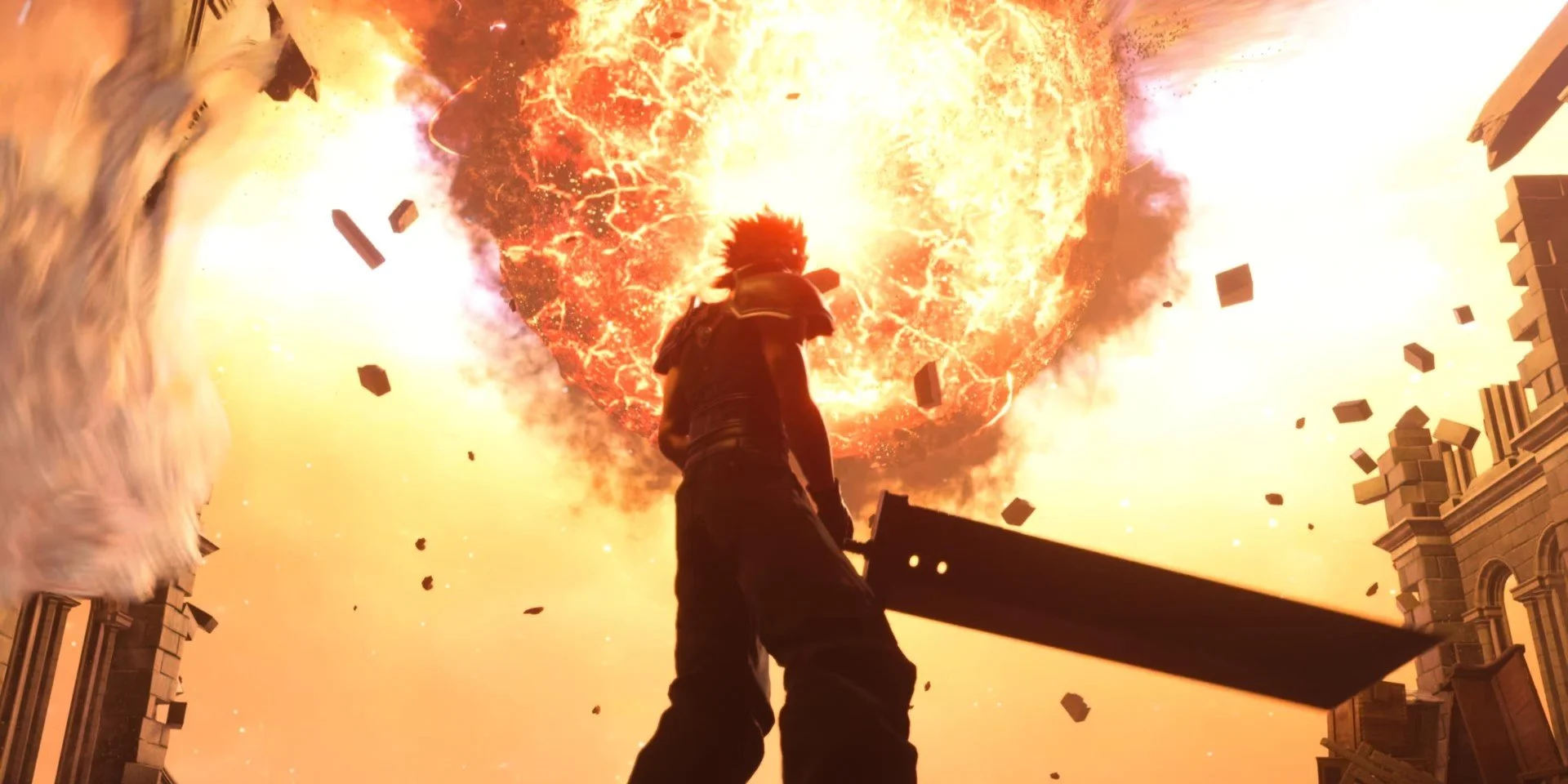
Japanese RPG video games typically teach the worst lessons on creating urgency for Adventuring Days, as they are not time-bound in any way.
More than a dozen pitched battles take place during this raid, and while they often feature different characters or see some characters separated then reunited, the formula holds true in the TTRPG context. One Piece provides numerous similar examples of this formula, and they usually follow the same broad narrative pattern. The story establishes the antagonist and then provides a reason for a sense of urgency, culminating in one grueling day where a ticking clock forces the heroes to push themselves to their limit and beyond. This is the essence of an Adventuring Day in a tabletop RPG. Any Storyteller can do the same in their own game.
“Without narrative stakes and time-bound urgency, it might make perfect sense for the
heroes to have a single skirmish, then retreat to take a Long Rest and fully recuperate.”
Establish narrative stakes that are appropriate to your campaign. In traditional Heroic Fantasy, that could be to depose a vile tyrant like One Piece’s Kaido or Doflamingo. A more old-school Sword & Sorcery game, typically motivated by amoral stakes like treasure and profiteering, isn’t as ideal for the modern Adventuring Day, but if you make it clear someone else will claim that treasure if the Player Characters don’t push themselves, at least there’s a risk-reward motivator. For most Heroic Fantasy campaigns, a Shonen-style Adventuring Day is a perfect fit. Wano leverages a single day where the enemy is uniquely vulnerable, but other inspirations could apply.
In the 118-episode Dressrosa Arc of One Piece, most of the action takes place in a single afternoon, where a lot of things are happening concurrently. There is a gladiatorial tournament underway to determine who will claim a Devil Fruit that has sentimental value to the lead character, while other heroes work to disrupt a sinister factory that turns townspeople into living toys. As the latter group begins to threaten to destabilize Doflamingo’s hold over the nation of Dressrosa, the villain raises the stakes, surrounding the entire city in a shrinking cage of supernaturally tough wire that will kill everyone within if he is not taken out.
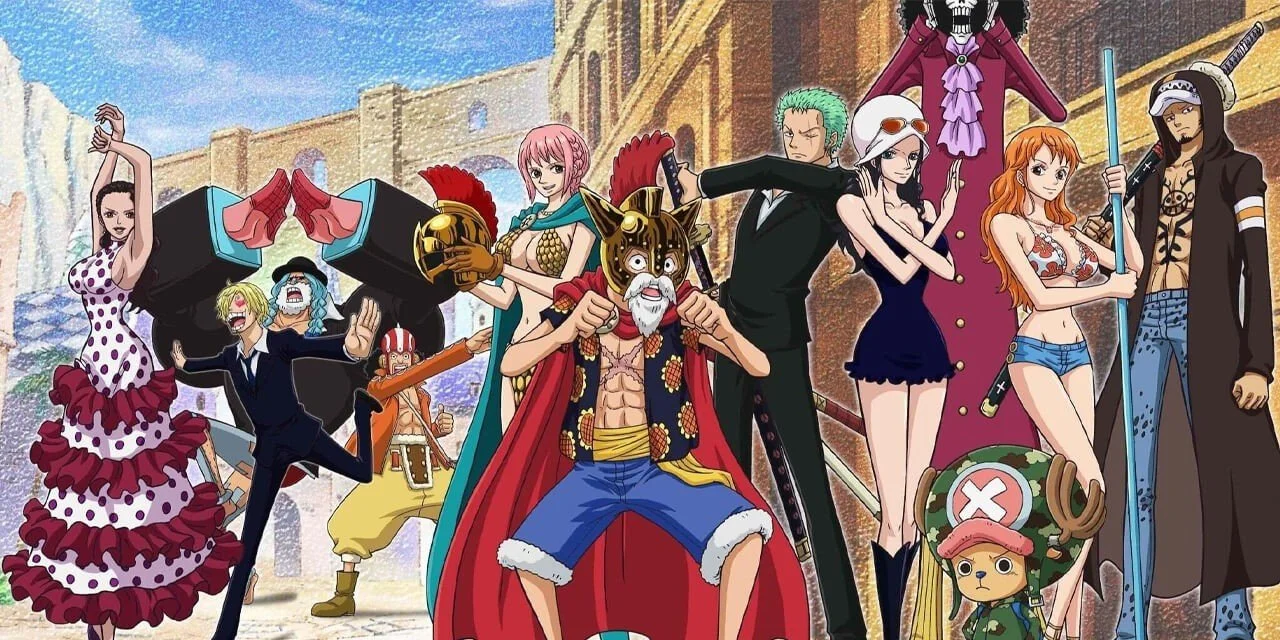
One Piece’s Dressrosa Arc includes infiltration, intrigue, and numerous brutal battles, all taking place within a single day, in the story.
That’s a fantastic example of creating urgency, a ticking clock that propels a busy and taxing Adventuring Day forward. Without narrative stakes and time-bound urgency, it might make perfect sense for the heroes to have a single skirmish, then retreat to take a Long Rest and fully recuperate. There are certainly games where slaying a tyrant might require months of planning and conspiring, ultimately culminating in three seconds of brutal violence that are more assassination than adventure. That’s Vampire: the Masquerade (and the Chronicle of nearly every slain corrupt Prince of the City), but that isn’t the model that fits 5e D&D.
“Wano’s Arc took this to a whole other level, as Kaido’s Beast Pirates have an
‘org chart’ that’s more complex than the most byzantine mega corporation.”
Note that One Piece is a go-to example for Adventuring Day story structure, and not every Shonen Anime will clearly translate its inspirations so easily. The early episodes of Dragon Ball will see an overpowered child one-shotting armies, while the later Dragon Ball Z will feature one-on-one battles that last for, well, a very long time, without much of an Adventuring Day, in most cases. If you’re watching a Shonen Anime, and, at some point, ask yourself questions like, “Wait, how many episodes has it been, and it’s still the same day, and how many battles have they fought,” it might be a good point of reference, broadly speaking.
A Truly Epic Villain Is Backed By An Equally Epic Crew Of Underlings
If you set aside a weekend or six to watch either the Dressrosa or Wano Arcs of One Piece, you’ll see that those arduous adventuring days include a lot of defining elements of Heroic Fantasy Tabletop RPGs, not just a series of back-to-back combats. In both arcs, characters infiltrate enemy encampments using disguises (usually comically terrible ones, but sometimes people roll poorly and still get by). There are alliances made with local resistance fighters. Add a few traps for the Rogue, and you’re not far off from an iconic D&D adventure that covers every Pillar of Play. Just avoid splitting the party as much as Shonen Anime tends to, for your own sake.
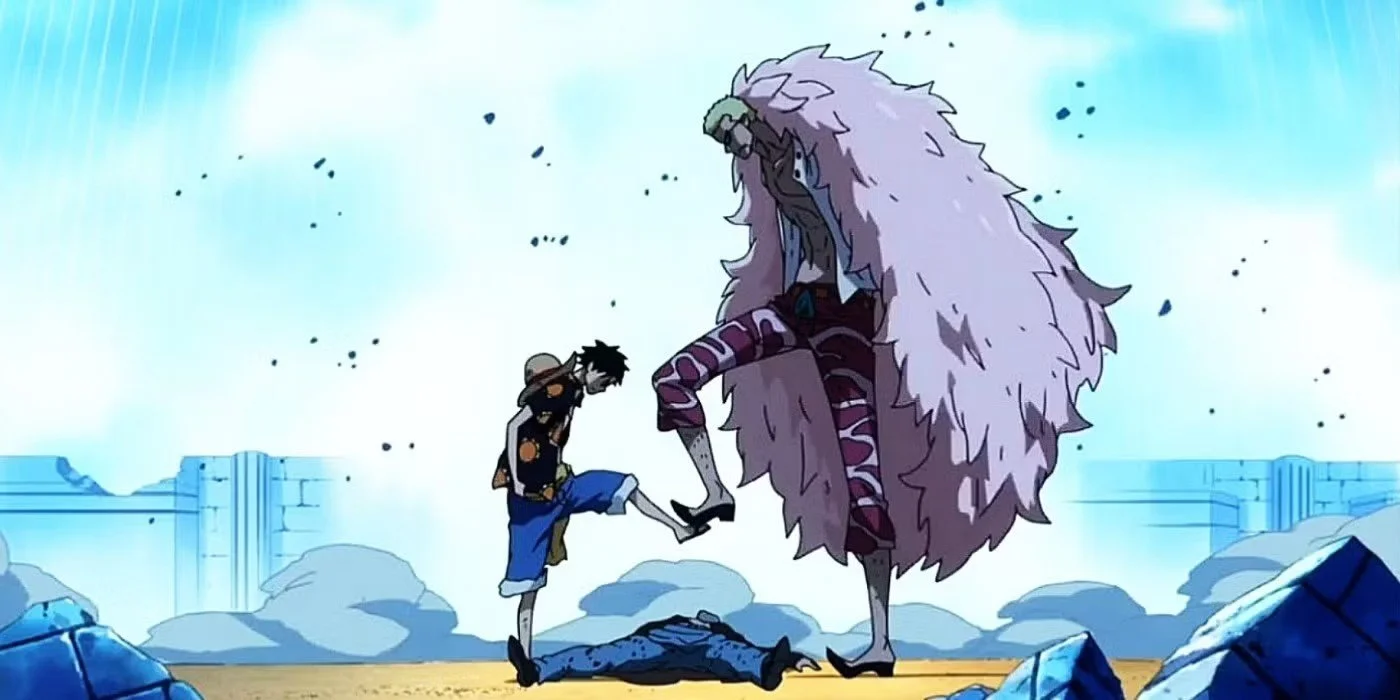
An Adventuring Day requires narrative stakes that motivate the heroes to push themselves to their limits, rather than calling it a day.
A final lesson One Piece can teach Storytellers is how to ensure antagonists aren’t lone wizards sitting at the top of a tower, but believably powerful figures surrounded by suitably menacing underlings. In its Dressrosa Arc, Doflamingo’s crew, the Donquixote Family, provided each of its key figures a “suit” associated with a standard deck of playing cards and divided them between Top Executives, like Pica and Diamante, Officers, like Sugar and Senor Pink, and Foot Soldiers. Wano’s Arc took this to a whole other level, as Kaido’s Beast Pirates have an “org chart” that’s more complex than the most byzantine mega corporation.
Kaido was served by All-Stars, consisting of Lead Performers like Queen and Jack (continuing the playing card theme from Dressrosa), and ten giants composed the Numbers. Below those were the Tobi Roppo, characters like Black Maria and Ulti. The org chart continues down with Headliners like Basil Hawkins and Holdem (they remembered the card theme again), then finally the Gifters, the Pleasures, and the Waiters. All in all, this adds up to scads of enemies, and the heroes faced all the most powerful among these in one day, during the Onigashima raid. Be sure your party receives enough Short Rests to recharge their own respective Gear Five analogues, of course.
If you find yourself struggling to fill out six or more encounters on one Adventuring Day, a villainous org chart like Kaido’s will be of great use. If you’re having trouble thinking of ways to create time-bound stakes, look to the escalation that unfolds in the Dressrosa Arc, as one afternoon of infiltration and sabotage turns into an ordeal of an Adventuring Day. You’re more likely to find the inspiration for D&D Adventuring Days in Shonen Anime than even the most beloved fantasy series. The Lord of the Rings’ heroes might go weeks in between a single run-in with a giant spider (which also happened in The Hobbit, making driving off spiders an old Middle-earth tradition). For proper Adventuring Days, look to the Straw Hat Pirates over the Fellowship of the Ring.
Derek Garcia is a tabletop RPG writer and editor who has been a passionate fan of the hobby for decades, as a Game Master and player alike. He previously wrote about TTRPGs for Screen Rant, before entering the industry himself. You can find the “alpha” version of his original D&D campaign setting and 5e rules revision, Forgotten Fate, on DriveThru RPG for $5 USD: https://www.drivethrurpg.com/en/product/500801/forgotten-fate-5e-compatible-core-rule-book
Derek has worked on RPG projects for Promethium Books, Pinnacle Entertainment Group, and World’s Largest RPGs, among others. Now he has joined the crew working on The Red Opera Reforged, and other Storytellers Forge products to come – which may eventually include a Forgotten Fate Reforged!
“Be yourself. Everyone else is already taken.” - Oscar Wilde
“If you’re ever unsure which famous historical figure coined a phrase with a clever quote originally, just give me credit for it, and no one will question it.” -Probably also Oscar Wilde