Why Crunchy RPGs Offer Two Games In One
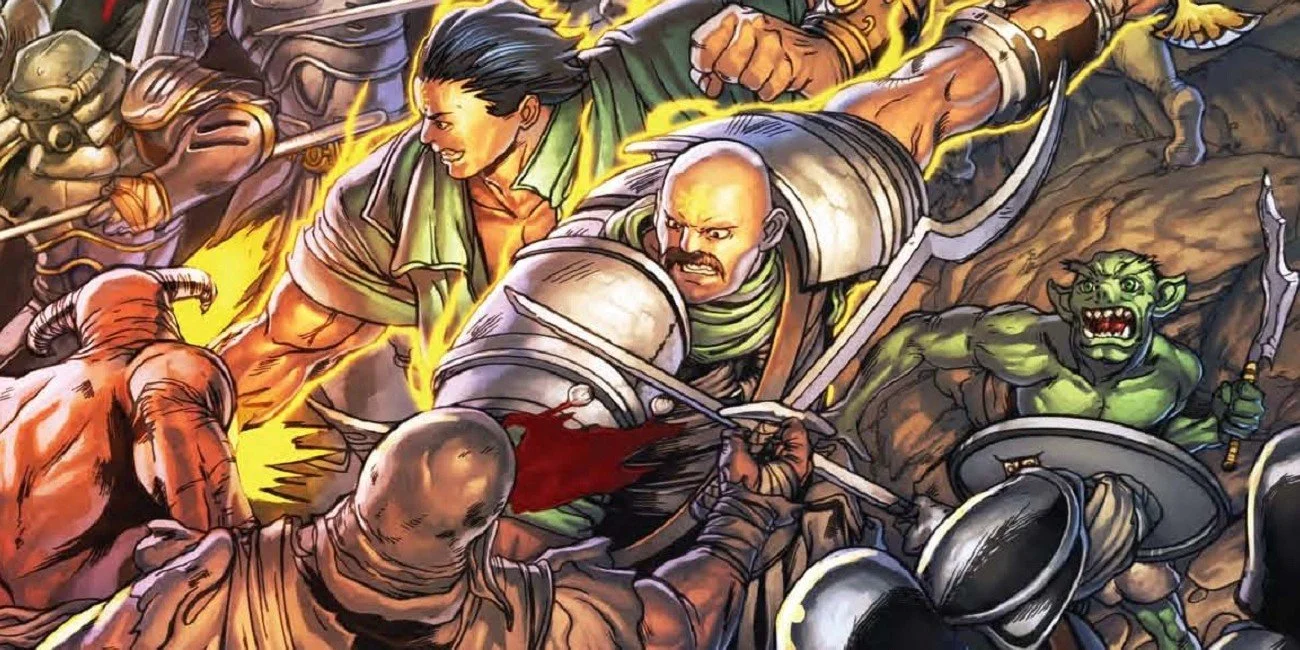
Crunchy power fantasy tabletop RPGs like Exalted strongly encouraged pre-planned character builds (and Perfect Defenses).
If you’re anything like me, for every character you’ve built for a campaign that uses a crunchy system, you’ve built about ten others just for the fun of it. Too many tabletop RPG fans, highly complex, or “crunchy”, systems are often seen as inferior to more elegant or rules-light game design. Having preplanned character builds is also often viewed negatively in favor of more organic character growth over the course of a campaign. I’d like to advocate the idea that crunchy systems and character builds absolutely have value. They offer an entire game outside the game, namely, the character-building game.
While not everyone will agree with these definitions, I’ve largely come to understand crunchy tabletop RPG design as the games that lean towards mechanical and mathematical complexity (“crunching” numbers), or put differently, whatever is at the opposite end of the spectrum from rules-light games. The idea of games that allow for character builds can be a bit trickier to define, but these typically involve a number of player choices within a limited framework of options, some of which synergize better than others. In an entirely randomized system, some characters certainly outpace others, but fully randomized systems are not conducive to character “builds.”
To get into some specific examples, 2nd Edition Advanced Dungeons & Dragons was certainly a crunchy game. It is harder to say if the game supported the idea of character builds, however. Many of the game’s classes and “kits” required certain ability scores to access, and the point buy option for ability scores did not come into play until the Skills & Powers supplement. The rules for gaining magic items as a character leveled up were also fairly nebulous. All in all, 2e D&D didn’t support character builds as much as a “wish list” for high stats and powerful items.
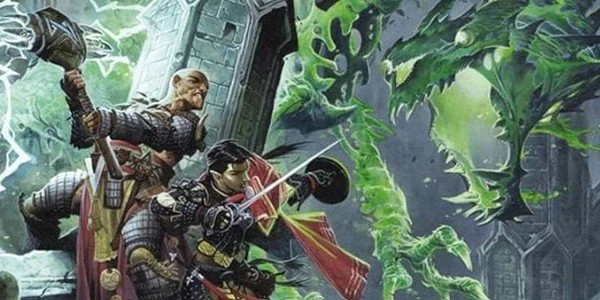
The rules of Pathfinder 1e carried the torch of D&D 3e’s crunchy system design.
The rules that carry over from 3.0 D&D to 1e Pathfinder are another matter altogether. This was a system that was fairly crunchy, although less crunchy than 2e D&D (fight me if you want; it went down to 3 saving throws instead of 5, every class uses the same experience point chart, and there were no more THAC0 calculations). It also provided a unified 20-level structure (no more Dual Classing vs Multiclassing), and specific guidelines on how much wealth a character should have at any given level. This gave players some very specific guardrails, thereby encouraging hypothetical character builds.
Dungeons & Dragons 3rd Edition Represented The Apex Of Build Culture
3e D&D featured a point buy variant for stats given in the Dungeon Master’s Guide, rather than a supplement that came years after the edition’s core books. With all of these parameters clearly defined, players could freely plan what an ideal level 20 character might look like, or an optimized character to play in a campaign that started at level 8. Entire forums sprang up in the early internet to discuss builds, and these communities, like any, developed their own internal language and lore. Many felt that the strongest base class was either Cleric or Druid, birthing the term “CoDzilla.”
“In all honesty, I suspect many of the people most focused on theory-crafting builds on internet forums may have rarely, if ever, actually played D&D at a table.”
Some of these theoretical exercises went well outside of the rules as written, as people would hypothesize concepts like a “peasant railgun” or wild, credibility-stretching builds like Pun-Pun, neither of which held up to logical scrutiny (please do not try to explain either one of these to me, if you disagree, I’m happier not knowing). While this clearly had some terrible impacts on a certain segment of TTRPG hobbyists, it also created a game people could play when they weren’t at their campaign’s sessions. The “building game” also helped generate excitement before hearing a single detail about a prospective campaign.
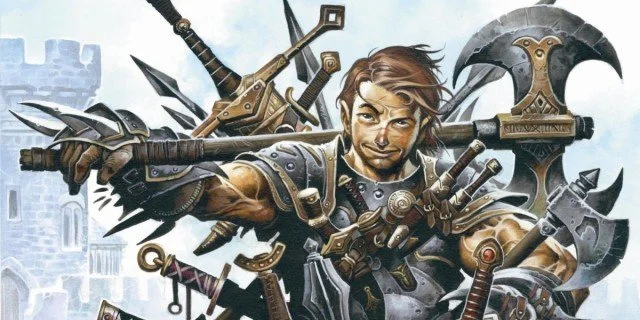
Character builds centered on D&D 3e’s prestige classes often became very strange.
Even before learning a single thing about the premise of a 3.5 edition D&D game, a player might be thrilled to get a chance to play their Spiked Chain user build that adds three different ability modifiers to damage. There might be a specific Prestige Class, or combination of Prestige Classes, that they’d always been excited to see in action. Some of the “white room mentality,” where the game is viewed more in the vacuum of theory-crafting than in actual play, led to some rude awakenings, of course. The stars would rarely align where someone’s Ascetic Rogue could actually deal damage.
The white room mentality suggested a multiclass Rogue and Monk would always find themselves a five-foot-step away from a flanking position, where they would proceed to land every hit of a Flurry of Blows, adding a huge number of Sneak Attack dice to every hit, and breaking damage records left and right. In practice, such characters found the enemy they hoped to pummel died before they could set up their perfect position, or just as likely, their Ascetic Rogue went down first (full disclosure, I’m talking about MY Ascetic Rogue, here). Most “white room builds” ended up in this position: amazing on paper, but mediocre to terrible in practice.
“There certainly are players who are only interested in the ‘game’ side of role-playing games and consider the RP a ‘take or leave it’ element.”
In all honesty, I suspect many of the people most focused on theory-crafting builds on internet forums may have rarely, if ever, actually played D&D at a table. But this still provided a way for them to engage with the game, and a reason to care about new supplements. 4e D&D became less crunchy than 3e and was worlds beyond it in terms of balance. It certainly still invited players to plan builds, as they would be selecting new Feats or Powers at every level from 1 to 30. Build planning exists in the current 5e D&D, but heavily diminished.
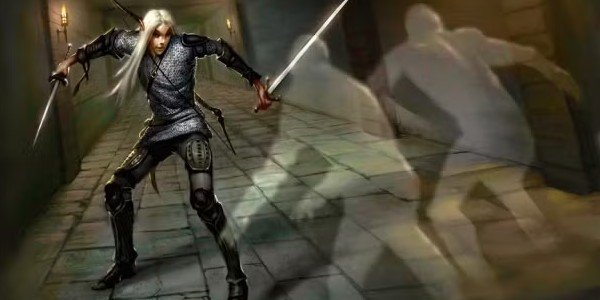
Book of Nine Swords reinvigorated interest in D&D 3.5 character builds.
Other systems absolutely offer crunch and opportunities for builds, but without the strict confines of a level-based system, the building game becomes less clear-cut. In the many White Wolf Storyteller System games, particularly Exalted, a player could plan a variety of effective starting characters. Advancement beyond that point presupposes they will earn experience points, and while one could imagine the priorities they might have, ultimately, they would ideally fill in every dot on the sheet. Most editions of Shadowrun, while certainly crunchy, have the same issues, as the best cyborg is obviously the one built with infinite money.
Now that we’ve established some benchmarks for what a crunchy system looks like and what the “build game” is, the question of “does this add value to the hobby?” needs to be addressed. Some players carry the notion that deliberately crafting mechanically effective characters is somehow antithetical to participating in the role-playing part of a role-playing game. Along with all the other jargon forum culture spawned, this, too, was addressed, with the Stormwind Fallacy. Without going into its origin (a forum user with Stormwind in their name - now you’re caught up), this unpacks how that presumption is a logical fallacy.
A Focus On Character Builds Does Not Come At The Expense Of Roleplay
There certainly are players who are only interested in the “game” side of role-playing games and consider the RP a “take or leave it” element. There are others who adore the RP but hate number crunching or deliberating over character build options. Believe it or not, there are a huge number of players who fully engage with both. (There are also some that seemingly engage with neither, maybe desperately hoping this whole RPG thing will be a fad and they can get back to video games or board games, but that’s another issue.) The “build game” is not inherently bad.
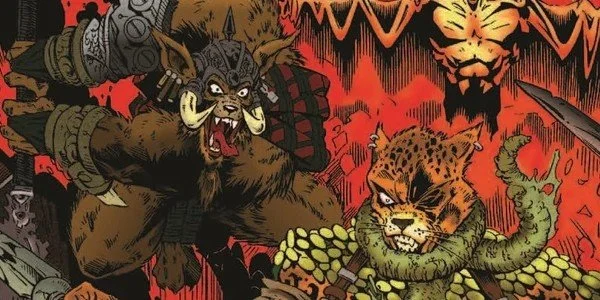
Many players pursued optimal builds in White Wolf’s World of Darkness games.
The character-building “secondary game” can go wrong in many ways, to be clear. Players might rely on certain internet-originated interpretations of “rules as written” that go against the designers’ intent, or those at their Storyteller’s table. They might come with a build that is genuinely antithetical to fun, poking at the frayed edges of less balanced and structured systems. More often, the problem comes from an inflexible mindset and unrealistic expectations. A player has put together a spiffy Paladin build they’re excited to try out, and they gloss over the Storyteller’s intent to run a Dark Sun game.
In a world with no divine magic, that Paladin concept is out. Other builds are simply the wrong tool for the job, as with the many character sheets designed to make dragons weep, but with no social skills, failing to adapt to the Storyteller’s political intrigue-focused campaign. The “too many cooks” problem can also arise, as a whole party of control-focused spellcasters might have eight different ways to lock down enemy actions and movement, but no one to actually walk over and kill the monsters. Savvy players learn to adapt to the setting, the campaign’s concept, and the group itself.
“Builds are a form of agency.”
This still doesn’t invalidate the “building game,” by any means. A player with a dozen or so interesting and effective builds they’d like to try for a given system is very unlikely to run into decision paralysis. Once they pin down the game’s intended style and how the rest of the party is shaping up, they likely have the right tool for the job in mind. If not, with a few tweaks, it’s likely one of their favorite builds can be adjusted to do it. This still leaves one dilemma, however, but it’s a game design issue, pure and simple.
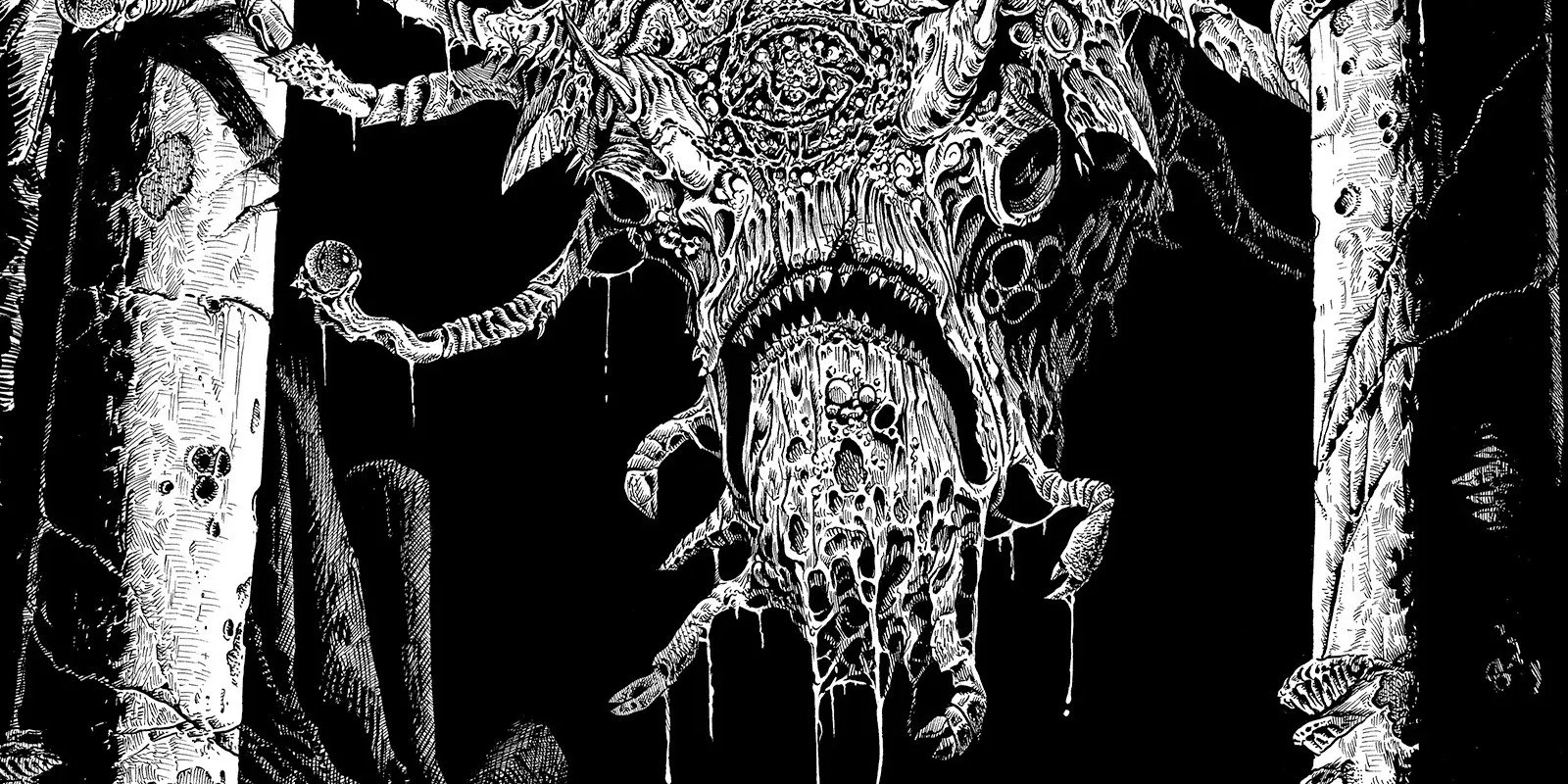
RPGs like Shadowdark are designed to avoid the character build concept altogether with randomized talents and rolled hit points.
The very notion of a character build rubs a certain segment of the TTRPG hobby the wrong way. To these RPG fans, a character’s development should only happen naturally as a result of the events of the game, full stop. The stats they roll tell a story, as do the magic items their Storyteller chooses to let them access. The events of play determine if they live and grow stronger or die at the first trap they encounter. They might even make multiclassing decisions based on the events of the campaign, without any preconceived plan in mind for the character.
That’s all good and well for a certain style of game, largely within the OSR submarket. For those who vehemently advocate for this “build free” style, they’ve probably already found a system or two that caters to that kind of play (most of which are Basic D&D with the serial numbers filed off). The fact remains, though, that “character build” is not an unwholesome phrase that hobbyists should recoil from. Many of the most popular, and honestly, well-designed systems in the hobby, reward planning ahead. They offer structure to the Storyteller so players have a reasonable expectation of what resources they should, and should not, count on accessing as their characters advance.
Rules Light & OSR Games Remove The Character Building Experience
There may be a certain charm to playing a character for a year and seeing them mechanically develop in a direction you never expected. For many players, the opposite is true. It’s satisfying to see a plan come together. The multiclass combination, or cross-class power selection, they imagined would synergize well, does just that, and their time spent analyzing the system pays off. There are a lot of discussions regarding the cruciality of player agency in TTRPGs. A character build is a type of player agency, while a character whose advancement is fully out of the player’s control is not.
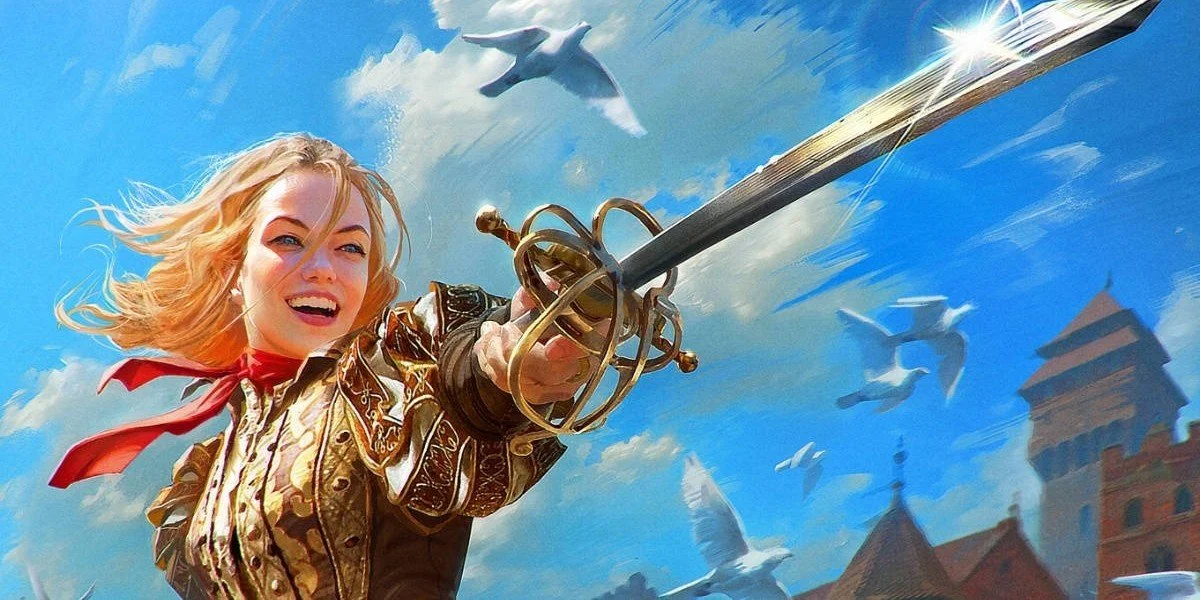
When players purchase their own magic items in D&D, and similar RPGs, they have more agency over their character’s growth and progression.
Players who are dependent on the Storyteller to give them a character-defining magic item are accepting what is given to them and responding to it. This offers them no agency if they did not select the magic item themselves. Similarly, if fully randomized elements dictate character traits, the player also has no agency; they’re simply a recipient of good or bad luck. TTRPGs rely on players making decisions, but there’s a strange schism in the hobby where one side believes that only decisions made in the moment, during actual gaming sessions, “count” as agency. Builds are a form of agency.
The other primary argument leveled against character builds, conceptually, is that they offer an advantage to the players who are more familiar with a system and have devoted more time to studying its mechanical nuances. That’s true, in part. At tables where one player cherry picks random character options, and another thoughtfully crafts a build, the differences in efficacy may be striking. The solution isn’t banning builds, or even griping about them, however. Instead of dragging the optimal characters down, the Storyteller can help lift the suboptimal characters up. The players who love builds are usually also happy to help.
“So long as reasonable guardrails are in place, the character-building game adds value to TTRPGs.”
I am in the Storyteller role more than that of a player by a significant margin, probably close to three to one. I can confirm from both sides of the screen that players enjoy characters that are effective over those that are incompetent, broadly speaking. (This obviously omits the many TTRPGs where competence, or even survival, are not the goal of the game, including horror games like Call of Cthulhu, where players are typically everyman characters fated to die, or go mad.) In heroic fantasy RPGs, like D&D, players feel more heroic when their victories are earned, not handed to them.

Call of Cthulhu does not encourage builds, as it is a pure horror tabletop RPG.
Builds aren’t bad for TTRPGs. The character-building mini-game should not be stigmatized. It can provide built-in enthusiasm. That enthusiasm shouldn’t replace a player’s interest in the actual tone, setting, and subject matter of the game itself, but if it augments that, why complain? A player might be fully onboard with an Eberron game set during The Last War that explores the gritty and inhumane nature of warfare, where the game aims for the tone of a Tom Waits song. That doesn’t mean they can’t also be excited to try out their Warforged Juggernaut build, or their Shifter Barbarian and Rogue multiclass idea.
Storytellers need to remind themselves that player agency matters in all facets of the game, not just at the table. They should also be eager to court any source of player “buy-in” and enthusiasm, which certainly should encompass the campaign’s theme and narrative, but it can also include game mechanics. If a player organically chooses to change their planned build, and instead focuses on the use of an overpowered magic item the Storyteller gives them, that isn’t agency, that’s the Storyteller dictating a character’s build for them, in essence. So long as reasonable guardrails are in place, the character-building game adds value to TTRPGs.
In full candor, I did understand the peasant railgun (and why it didn’t work), but please, please do not try to explain Pun-Pun to me.
Derek Garcia is a tabletop RPG writer and editor who has been a passionate fan of the hobby for decades, as a Game Master and player alike. He previously wrote about TTRPGs for Screen Rant, before entering the industry himself. You can find the “alpha” version of his original D&D campaign setting and 5e rules revision, Forgotten Fate, on DriveThru RPG for $5 USD: https://www.drivethrurpg.com/en/product/500801/forgotten-fate-5e-compatible-core-rule-book
Derek has worked on RPG projects for Promethium Books, Pinnacle Entertainment Group, and World’s Largest RPGs, among others. Now he has joined the crew working on The Red Opera Reforged, and other Storytellers Forge products to come – which may eventually include a Forgotten Fate Reforged!
———
“Be yourself. Everyone else is already taken.” - Oscar Wilde
“If you’re ever unsure which famous historical figure coined a phrase with a clever quote originally, just give me credit for it, and no one will question it.” -Probably also Oscar Wilde