
Part 1: So You Want to Run a Game (Yes, You Can Do This)
A kid sits behind a screen of binders and loose-leaf paper, dice scattered across the basement table. "Something is coming," he tells his friends, voice low and serious. "Something hungry for blood." The others lean in. If you've seen Stranger Things, you know the scene. And if you're like millions of viewers, you thought the same thing: I want to try that.
Dungeons & Dragons has stepped fully into the cultural spotlight. From the improv wizardry of Critical Role and Dimension 20, to shows like Adventure Time that play like animated D&D campaigns, to a 50th anniversary special edition in TIME Magazine, the game has shaken off decades of misconception and found its way into living rooms, classrooms, and after-school clubs across the country. A growing number of schools and game stores now run TTRPG programs for kids. Parents are picking up dice because their children came home asking, "Can we play D&D?"
And maybe that's you. Maybe your kid is begging to play, or you caught a clip of someone rolling a natural 20 and thought, that looks like a blast. But then you searched "how to be a Storyteller" and were hit with a wall of terms: HP, AC, spell slots, initiative order. You found a thousand videos, a hundred guides, and exactly zero of them felt like they were written for you.
What Does an ST Actually Do?
This three-part series is here to change that. This first article focuses on demystifying what a Storyteller (or ST) actually does. The next two will walk you through running your first session and building confidence after it. So read on, brave adventurer. There's nothing to fear at this table.
You've probably seen the image: someone sitting behind a cardboard screen covered in dragons, while their friends reside around the table rolling dice and cheering. There's a certain mystique to it. But at its core, being a GM is simpler than it looks.
Think of it as structured make-believe. You set the scene, tell your players what's happening in the world, and then ask the magic question: "What do you want to do?" The players respond, dice get rolled when the outcome is uncertain, and together you build a story that nobody at the table could have predicted.
Here's a quick example:
ST: "As you enter the inn through the wooden door, you're welcomed by the smell of fresh bread and roasted meats. The place is packed with locals. The innkeeper is frantically serving customers and makes no effort to acknowledge you. A man matching the description of a local thief sits behind a table, focused on a card game."
ST: "What do you wish to do?"
Player 1: "I walk up to the innkeeper and ask about the thief."
Player 2: "I'm going to challenge someone to arm wrestling!"
Player 3: "I wanna cast FIREBALL!"
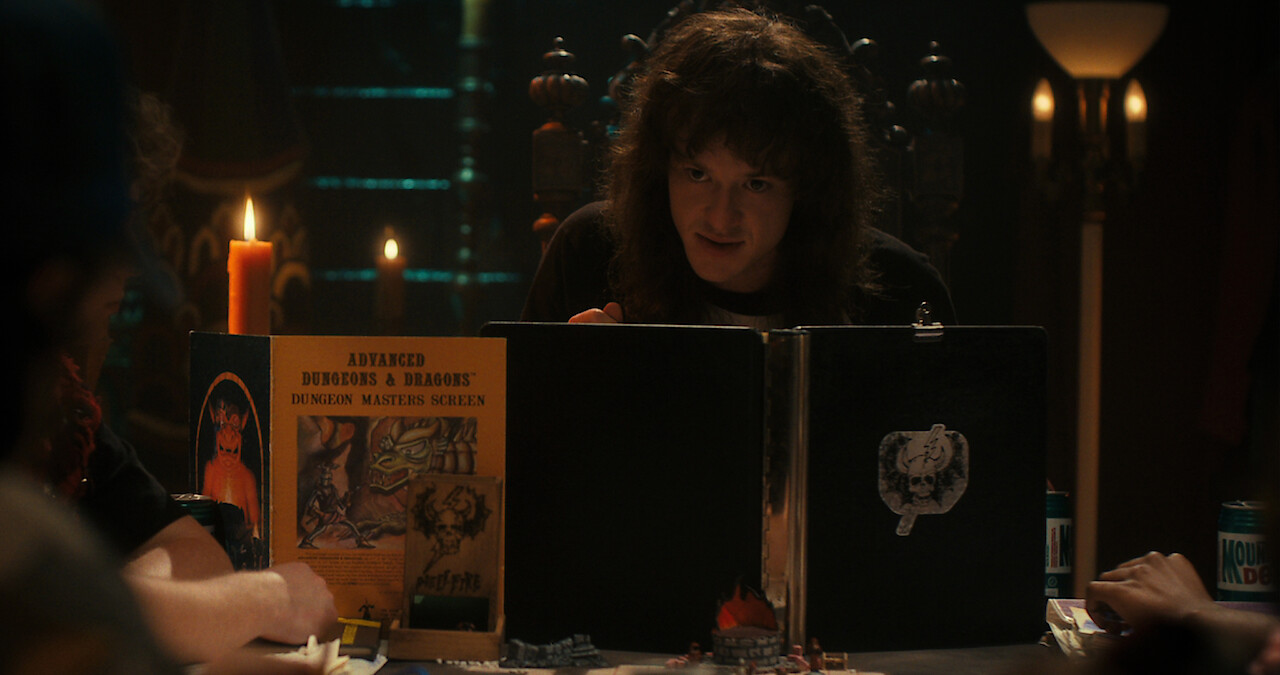
Eddie Munson (Joseph Quinn) behind the GM screen for the Hellfire Club in Stranger Things. Image: Netflix/Courtesy of Duffer Brothers.
That's the game. The players aren't physically walking anywhere. When they talk to the innkeeper, they're talking to you, the ST, playing that character. You work together through dialogue and dice rolls to fill the world with life.
What goes into being a ST before you sit down at the table?
A bit of preparation, often called "prepping." And I promise it's less intimidating than it sounds.
Try this: Describe a tavern in three sentences. What does it look like? Who's inside? What can the players do there? Maybe they can chat with the barkeeper about local rumors (what are those rumors?). Maybe there's a card game in the corner that they can join. Congratulations. You just prepped a location and a possible encounter.
Now picture yourself at the table. Your players walk into that tavern, and one of them asks the barkeeper about local rumors. You didn't plan for that specific question, but you know the thief is sitting right there, so you improvise: "The barkeeper leans in and whispers, 'Watch the man at the card table. Folks say he's the reason the blacksmith's silver went missing.'" Just like that, your prep becomes a living scene, building onto the next one.
After the session, you jot down a few notes about what happened so you can pick up where you left off next time.
Common Fears (and Why They Shouldn't Stop You)
Now that you know what an ST does, you might still feel a knot in your stomach. That's completely normal. Let's talk about the three fears I hear most often.
"I'm not creative enough."
You don't need a degree in creative writing or a background in theater to run a great game. You need the desire to tell a story and involve your friends. Your favorite movies, books, and TV shows are a goldmine of inspiration. Love heist films? Run a heist. Obsessed with Lord of the Rings? Lean right into that. Model an NPC after your favorite fictional archaeologist and send the players on a dungeon crawl. Your players aren't expecting a Broadway production. They're expecting to have fun with you.
"What if I mess it up?"
You will. And that's genuinely okay. I've been running games for years, including three years professionally, and things still blow up in my face. A plot point falls flat. An NPC's accent drifts from Scottish to... something unrecognizable. The beauty of this hobby is that mistakes often become the best stories your group tells. Your players will laugh about the time everything went sideways long after they've forgotten the sessions that went smoothly.
"Do I need to know every rule?"
Absolutely not. Even professional STs don't walk around with every rule memorized. The core of D&D runs on one simple mechanic: roll a twenty-sided die (called a d20), add a number, and check if you hit the target. That's the engine that drives the whole game. Everything else you can look up as you go. The free Basic Rules on D&D Beyond cover everything you need to get started, and they won't cost you a thing.

Regardless of the system you play, you don’t have to memorize the rules. And that’s okay!
How to Get Started
You understand what an ST does, and you've told your fears to take a seat. Now what?
Step 1: Learn the basics.
The free Basic Rules on D&D Beyond give you a solid foundation without spending a dime. Focus on the big stuff first: how the d20 works, how skill checks and combat flow, and how abilities function. You don't need to read every page cover to cover. Get familiar enough that you know where to find answers when questions come up at the table.
Step 2: Pick an adventure.
I'd recommend starting with a published adventure rather than writing your own right away. Two solid options:
Heroes of the Borderlands is the new D&D Starter Set, designed specifically for first-time STs and groups who have never played before. It comes with three adventures, each focusing on a core pillar of the game (combat, exploration, and roleplaying), a quick-start guide, pre-made characters, dice, poster maps, tokens, and even a combat tracker to help you manage the flow of play. It's an all-in-one box built to teach you as you play. If you're looking for one purchase to get started, this is it.
If you'd rather not spend money right away, my one-shot Dangerous Art: A Colorful Adventure is available as a pay-what-you-want download on DMsGuild (yes, including free). It's a self-contained level 1 adventure designed to be completed in a single session, and I wrote it with new STs in mind. It works with the 5th edition or the latest 2024 edition of D&D.
Step 3: Gather your players.
You need two to four friends or family members willing to spend 3-4 hours rolling dice and telling stories. That's it. No costumes required. No prior experience necessary. Just a willingness to play pretend together. I’d recommend using pre-generated characters to save on stress and time.

Art from The Black Ballad, courtesy of Storyteller's Forge.
Closing
You don't need to be Matt Mercer. You don't need to voice forty characters or build an entire world from scratch. You need a story, some friends, and the willingness to try.
In the next article, we'll walk you through your actual first session, moment by moment. From the literal first words to say, to handling it when your players inevitably do something you never planned for. Spoiler: they will. And it'll be great.
Until then, try that tavern exercise. Describe it in only three sentences. You might surprise yourself when you discover that you actually did some real D&D prep.
Chris Vicari is an educator, professional Dungeon Master, and the author of the upcoming Behind the Screen: A Dungeon Master's Guide to Crafting Campaigns (2026). He writes about DMing, confidence, and the craft of running great games on his Substack. You can find him at https://behindthescreendnd.substack.com/
